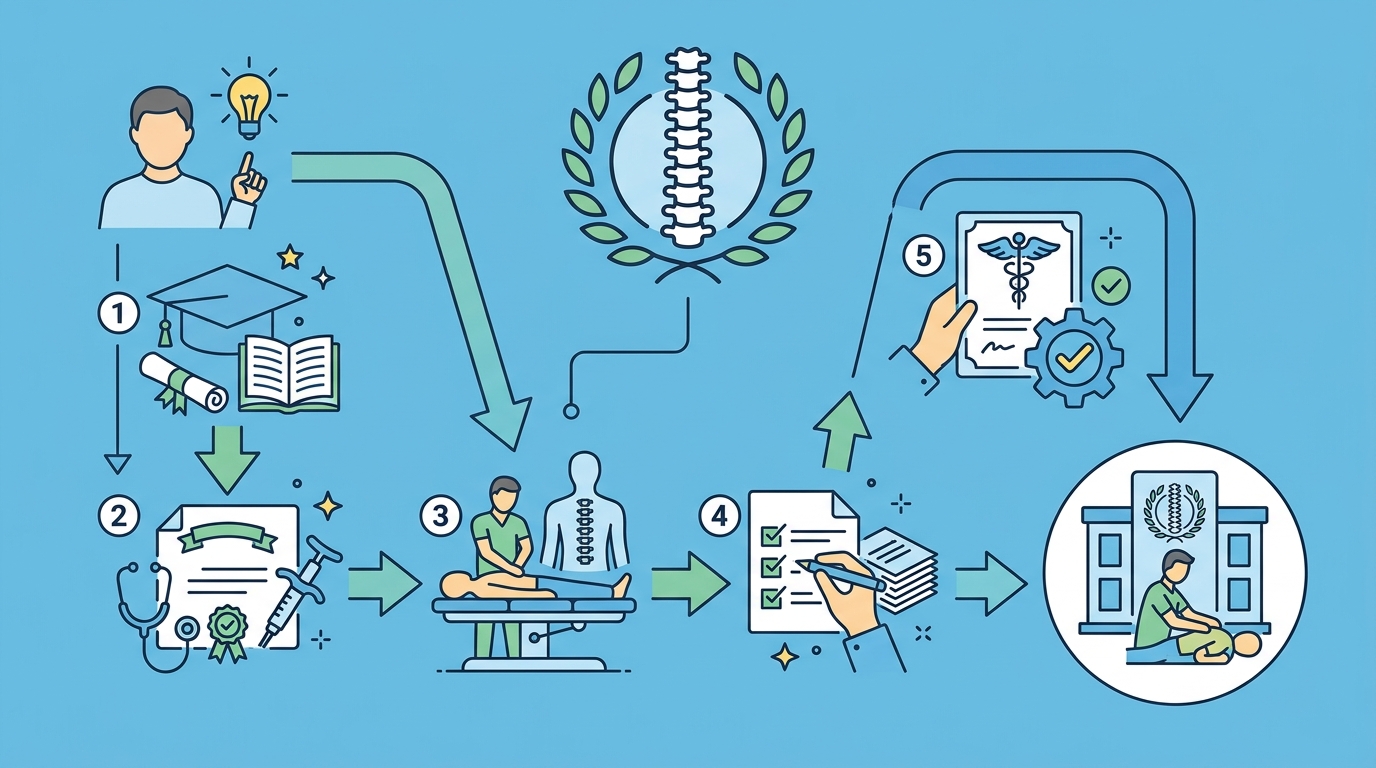
How to Become a Train Conductor
What conductor certification tests actually cover, how shift patterns and injury risk shape the work, and where the training happens and who pays for it.
Quick answer
- Fastest path: get hired directly by a railroad or transit authority and complete its own conductor training program, which most companies provide before you work unsupervised (U.S. Bureau of Labor Statistics, 2025).
- Typical timeline: a few days to around one year of job training, since O*NET places Railroad Conductors and Yardmasters (53-4031.00) in Job Zone 1-2 (O*NET OnLine, U.S. Department of Labor, 2026).
- Minimum credential: a high school diploma or equivalent, plus — in the US — conductor certification under 49 CFR Part 242, including a vision and hearing test, a background test and random drug and alcohol screening (U.S. Bureau of Labor Statistics, 2025).
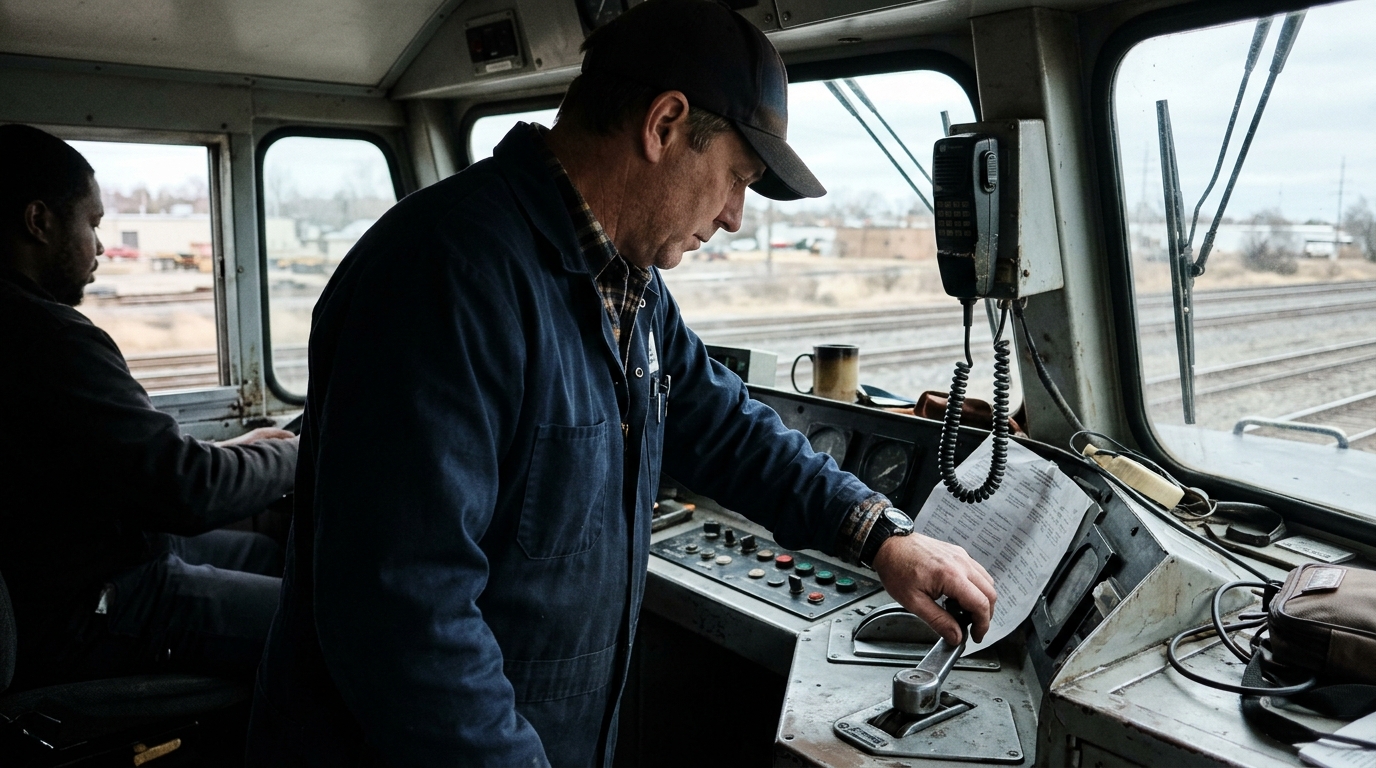
Becoming a train conductor usually starts with a high school diploma or equivalent rather than a degree, followed by a railroad-run training program and a certification test before you work unsupervised. In the United States, conductors on national, regional and commuter railroads must pass a certification test designed and administered by the railroad and approved by the Federal Railroad Administration, covering written knowledge, skills and route knowledge (U.S. Bureau of Labor Statistics, 2025).
The route from application to qualified conductor is typically measured in months, not years, but it comes with 24/7 scheduling, background and drug screening, and one of the highest injury rates of any occupation.
Is This Career Right for You?
Trains run 24 hours a day, seven days a week, so conductors' schedules may include nights, weekends and holidays; federal regulations set a minimum number of rest hours, and some workers, known as extra-board, are hired only for temporary or substitute work (U.S. Bureau of Labor Statistics, 2025). Extra-board work means being called in with little notice and limited control over your week.
The work is physical. You climb on and off moving-equipment steps, walk the length of trains over uneven ballast, line switches and couple or uncouple cars in whatever weather the yard gives you. Railroad conductors and yardmasters have one of the highest rates of injuries and illnesses of all occupations (U.S. Bureau of Labor Statistics, 2025), which is why rule compliance and safety briefings dominate training.
Conditions split sharply by sector. Conductors on passenger trains generally work in cleaner, more comfortable conditions than freight conductors, but they sometimes have to respond to upset or unruly passengers (U.S. Bureau of Labor Statistics, 2025).
This suits people who tolerate irregular sleep, want outdoor or on-train work rather than a desk, and are comfortable following written operating rules exactly. It does not suit people who need fixed daytime hours, cannot meet vision and hearing standards, or want to avoid random drug and alcohol screening (U.S. Bureau of Labor Statistics, 2025). Pay is usually hourly or trip-based and set by seniority and union agreement; check official statistics for your country — such as the US Bureau of Labor Statistics — for current rates.
Steps to Becoming a Train Conductor
- Finish secondary education (typically 3-4 years, already done for most applicants). Typical entry-level education for railroad workers, the group that includes conductors, is a high school diploma or equivalent, with moderate-term on-the-job training (U.S. Bureau of Labor Statistics, 2025). ONET classifies Railroad Conductors and Yardmasters (53-4031.00) in Job Zone 1-2, requiring a high school diploma or GED (ONET OnLine, U.S. Department of Labor, 2026).
- Check the hiring gates before you apply (days). Railroad workers must be at least a stated minimum age and pass a background test, plus random drug and alcohol screenings during employment (U.S. Bureau of Labor Statistics, 2025). The exact age and background standards are set by the employer and the regulator in your country, so read the posting carefully.
- Apply to railroads and transit operators (weeks to months). Hiring runs in waves tied to attrition and traffic. Applications usually include an aptitude or reading-comprehension assessment, a panel interview on safety judgement, and a conditional offer subject to medical and background screening.
- *Complete conductor training (a few days to around one year of job training, per ONET OnLine, 2026).** Most railroad companies provide on-the-job training for conductors and yardmasters before they work unsupervised (U.S. Bureau of Labor Statistics, 2025). Amtrak and some larger freight railroad companies operate their own conductor training programs, while small and regional railroads may send conductors to a central training facility or a community college (U.S. Bureau of Labor Statistics, 2025). Employer-run training is normally paid for by the railroad; college-based courses are paid by you at the college's published tuition rate.
- Pass certification (built into training; timing set by the railroad). In the US, conductors on national, regional or commuter railroads must pass a certification test designed and administered by the railroad and approved by the Federal Railroad Administration, generally involving a written knowledge test, a skills test, and a supervisor determination of route knowledge (U.S. Bureau of Labor Statistics, 2025). The process railroads must use is governed by federal regulation 49 CFR Part 242, 'Qualification and Certification of Conductors' (Electronic Code of Federal Regulations, U.S. Government).
- Pass the vision and hearing test (one appointment). Engineers and conductors must pass a vision and hearing test at the end of the certification process (U.S. Bureau of Labor Statistics, 2025).
- Work the extra board and build seniority (months to years). Newly qualified conductors commonly start as extra-board workers hired for temporary or substitute work, covering nights, weekends and holidays (U.S. Bureau of Labor Statistics, 2025). Entry-level duties lean heavily on supervised switching, air-brake tests and paperwork for a limited set of territories; experienced conductors hold regular assignments, know multiple routes without supervision, and take charge of the crew and train documentation.
- Recertify, then consider advancement (periodic; several years to engineer). Engineers and conductors must be recertified periodically even if they do not switch routes (U.S. Bureau of Labor Statistics, 2025). Most locomotive engineers first work as conductors or yardmasters for several years before advancing (U.S. Bureau of Labor Statistics, 2025).
Education and Certification Options
Requirements differ by country and by employer. The rows below describe the main routes used in the United States, where the Federal Railroad Administration-approved certification process applies.
| Path | Typical time | Approximate cost | Required or preferred |
|---|---|---|---|
| High school diploma or GED | Standard secondary schooling | Public schooling or GED test fee set by your state | Required: typical entry-level education for railroad workers (U.S. Bureau of Labor Statistics, 2025) |
| Railroad-run conductor training program (e.g. Amtrak and some larger freight railroads) | A few days to around one year of job training (O*NET OnLine, 2026) | Normally funded by the employer; trainees are often paid, which varies by railroad | Required if you are hired by that railroad; it is how most conductors qualify |
| Central training facility or community college course used by small and regional railroads | Weeks to a semester, depending on the provider | Tuition set by the college or facility unless your employer sponsors you | Varies: some regional railroads send new hires there, others prefer prior completion |
| Conductor certification under 49 CFR Part 242 | Written knowledge test, skills test, supervisor route-knowledge determination, plus vision and hearing test | Administered by the railroad as part of qualification | Required by law for conductors on national, regional or commuter railroads in the US |
| Periodic recertification | Repeats on a set cycle even without a route change | Employer-administered | Required to keep working as a certified conductor (U.S. Bureau of Labor Statistics, 2025) |
Where to Find Train Conductor Jobs
Overall employment of railroad workers, including conductors, is projected to grow more slowly than average over the decade (U.S. Bureau of Labor Statistics, 2025), so openings tend to come from replacement hiring rather than expansion. Target the employers that actually run trains:
- Rail transportation companies' own careers pages. The rail transportation industry is the largest employer category for railroad workers (U.S. Bureau of Labor Statistics, 2025), and Class I freight railroads post conductor trainee openings directly rather than through aggregators.
- Amtrak's careers site. Amtrak operates its own conductor training program (U.S. Bureau of Labor Statistics, 2025), so passenger-service openings are recruited and trained in-house.
- Commuter rail and transit authority job portals. Local government excluding education and hospitals is one of the largest employer categories for railroad workers (U.S. Bureau of Labor Statistics, 2025); these roles are usually advertised through the authority's or city's public hiring system, with civil-service application steps.
- Support activities for rail transportation firms. This is another leading employer category (U.S. Bureau of Labor Statistics, 2025) and includes switching, terminal and contract crew operators at ports, industrial parks and grain or mining facilities.
- Short line and regional railroads. These smaller operators may send new conductors to a central training facility or a community college (U.S. Bureau of Labor Statistics, 2025), and often hire locally through their own websites and regional listings.
- SMART, the International Association of Sheet Metal, Air, Rail and Transportation Workers. Its Transportation Division represents railroad conductors among other rail workers (SMART), and local divisions are a practical source of information on hiring waves, seniority and the extra board.
- Community colleges with rail or conductor programs. Colleges named by railroads as training providers (U.S. Bureau of Labor Statistics, 2025) typically run employer hiring events and keep contacts with operators in their region.
- Railroad hiring events and in-person job fairs. Railroads frequently recruit for specific terminals and crew bases at scheduled events, where the posting is tied to one location you must be able to live near.
Frequently asked questions
Do I need a degree to become a train conductor?
No. Typical entry-level education for railroad workers, including conductors, is a high school diploma or equivalent, with moderate-term on-the-job training (U.S. Bureau of Labor Statistics, 2025). O*NET places Railroad Conductors and Yardmasters (53-4031.00) in Job Zone 1-2, meaning a high school diploma or GED plus job training of a few days to one year (O*NET OnLine, U.S. Department of Labor, 2026). A degree is not the barrier; passing certification and the medical screening is.
What will the training cost me?
Usually nothing directly, if you are hired first. Most railroad companies provide on-the-job training for conductors and yardmasters before they work unsupervised, and Amtrak and some larger freight railroads run their own conductor training programs (U.S. Bureau of Labor Statistics, 2025). The exception is a community college or central training facility course, where tuition is set by the provider and you may pay unless an employer sponsors you.
What are the age and background requirements?
Railroad workers must be at least a stated minimum age and pass a background test, plus random drug and alcohol screenings during employment (U.S. Bureau of Labor Statistics, 2025). The exact minimum age, the scope of the background check and any disqualifying records are set by the employer and the regulator in your country, so read each posting and ask the recruiter before applying. Expect screening to continue for your whole career, not just at hire.
What exactly is the certification test?
In the United States, conductors on national, regional or commuter railroads must pass a certification test designed and administered by the railroad and approved by the Federal Railroad Administration, generally comprising a written knowledge test, a skills test and a supervisor determination of route knowledge (U.S. Bureau of Labor Statistics, 2025). The process railroads must follow is set out in 49 CFR Part 242, 'Qualification and Certification of Conductors' (Electronic Code of Federal Regulations, U.S. Government). You also pass a vision and hearing test at the end of the process, and recertify periodically even if you never change routes.
How long before I can become a locomotive engineer?
Plan on several years. Most locomotive engineers first work as conductors or yardmasters for several years before advancing (U.S. Bureau of Labor Statistics, 2025), and promotion usually depends on seniority and openings at your crew base rather than on applying externally. Engineers also face their own certification and periodic recertification requirements.
Sources
- U.S. Bureau of Labor Statistics — Railroad Workers : Occupational Outlook Handbook (2025)
- O*NET OnLine (U.S. Department of Labor) — 53-4031.00 - Railroad Conductors and Yardmasters (2026)

Written by
Desmond writes about the mechanics of job searching: resumes, interviews, the long silence after applying. He's fascinated by how much of getting hired depends on luck dressed up as skill.