
Career Paths
Career Paths guides on Career Horizon HQ.

What Does a Genetic Counselor Do? Duties, Skills, and Salary Explained
A genetic counselor helps people understand inherited conditions and genetic test results, then supports them through what to do next. The work combines clinical science — collecting family and medical histories, interpreting genetic information, explaining testing options — with counselling skills, because most of the day is spent talking to patients and writing up what was discussed (U.S. Bureau of Labor Statistics, undated).
Noor Abdallah · 9 min read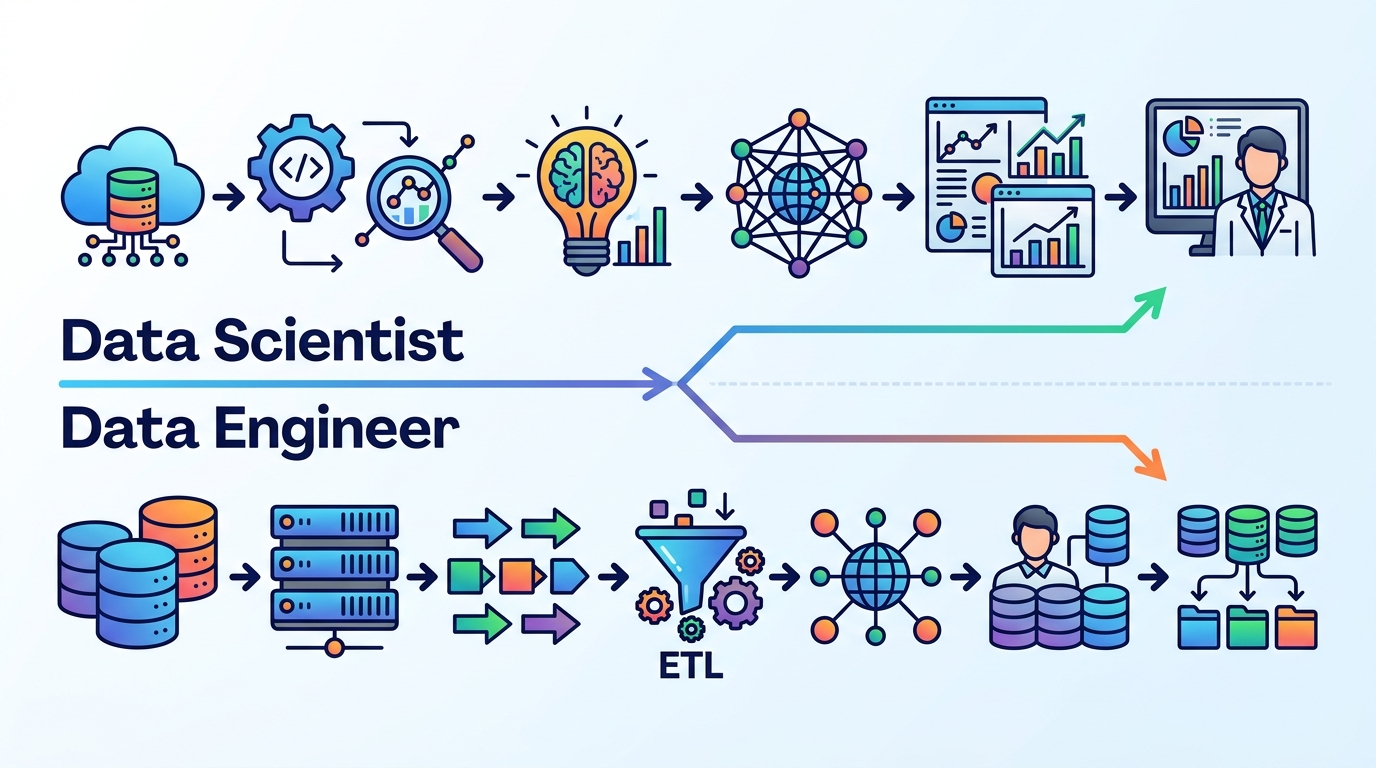
Data Scientist vs. Data Engineer: Which Career Path Is Right for You?
Data scientists find patterns in data and turn them into recommendations; data engineers build and maintain the databases and pipelines those recommendations depend on. In the United States, data science is the larger and faster-growing field — the U.S. Bureau of Labor Statistics (2025) reports a median wage of $120,230 a year for data scientists and projected growth of 35 percent from 2025 to 2035 — while the nearest published category for engineering-side work, database administrators and architects, shows a higher combined median of $126,760 but only 4 percent projected growth over the same period.
Desmond Okafor · 9 min read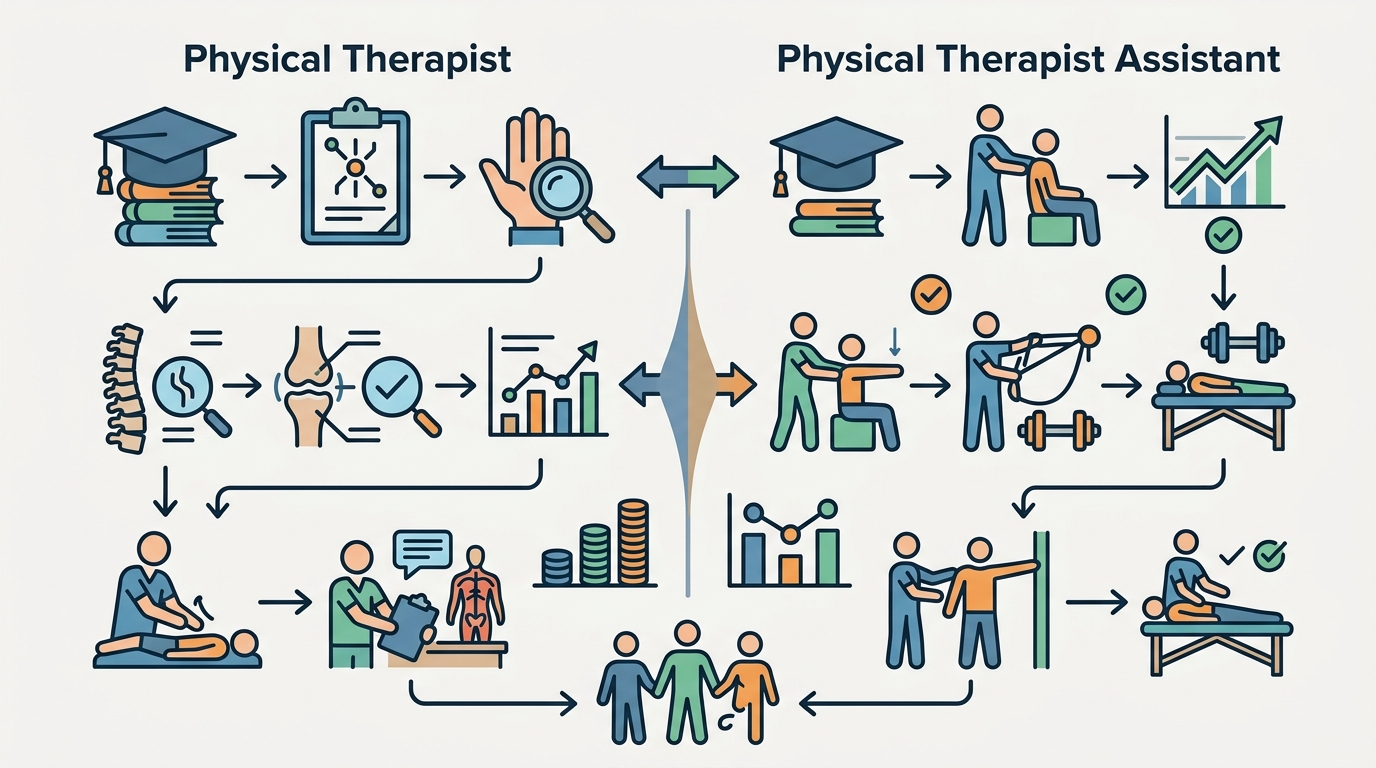
Physical Therapist vs. Physical Therapist Assistant: Pay, Duties, and Day-to-Day Differences
A physical therapist evaluates patients, diagnoses movement problems and writes the plan of care; a physical therapist assistant carries out much of that plan under the therapist's direction and reports back on progress (U.S. Bureau of Labor Statistics, 2025). The biggest practical gap is schooling: in the United States, a PT needs a doctoral degree, typically a three-year Doctor of Physical Therapy program on top of a bachelor's, while a PTA typically needs a two-year associate's degree from an accredited program (U.S. Bureau of Labor Statistics, 2025).
Wyatt Holloway · 9 min read
How to Become a Chiropractor: Education, Licensing, and First-Job Steps
Becoming a chiropractor means earning a Doctor of Chiropractic (D.C.) degree and holding a licence to practise. In the United States, D.C. programs typically take four years and require at least three years of undergraduate college education for admission, and all states plus the District of Columbia require a licence based on an accredited degree and the National Board of Chiropractic Examiners exams (U.S. Bureau of Labor Statistics, undated).
Priya Chandrasekaran · 10 min read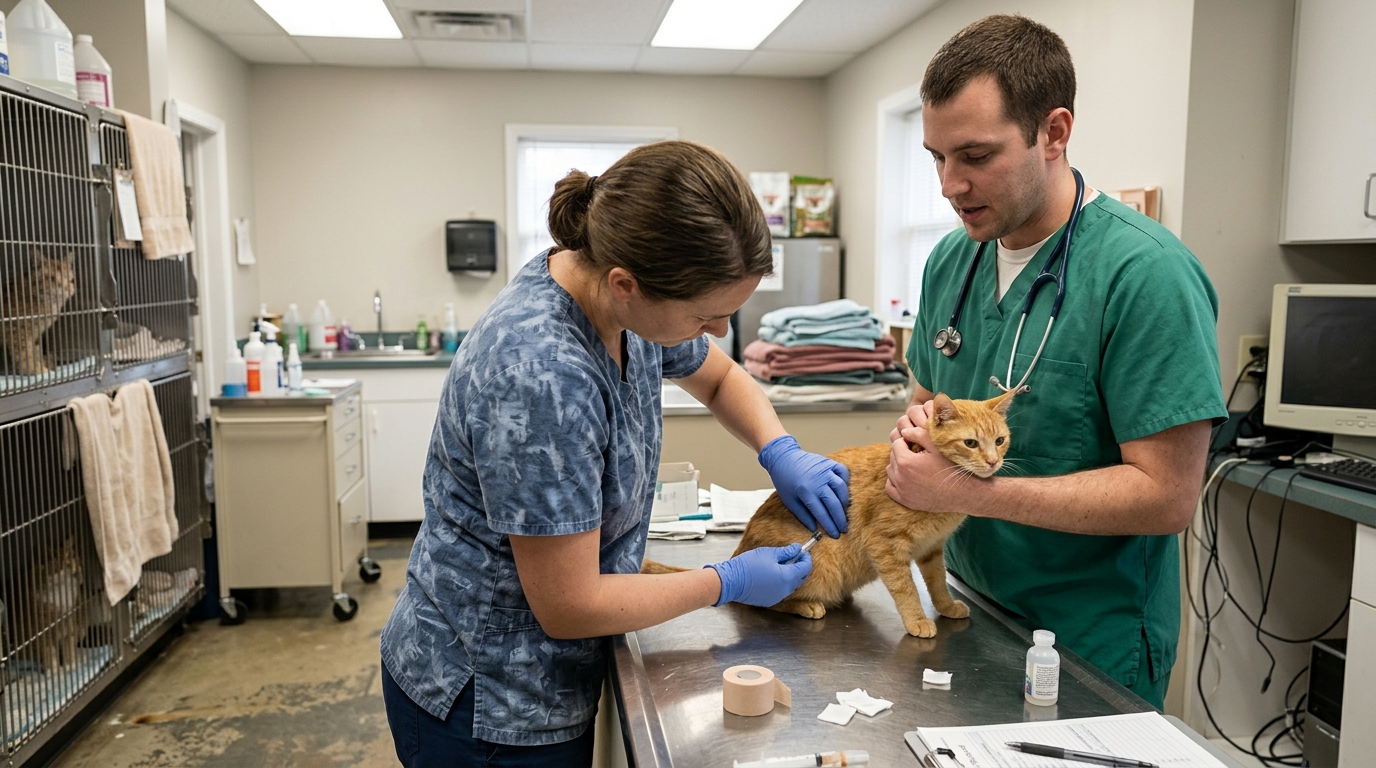
How to Become a Veterinarian: Step-by-Step Guide
To work as a veterinarian you need a Doctor of Veterinary Medicine (DVM or VMD) degree from an accredited veterinary college plus a licence to practise, according to the U.S. Bureau of Labor Statistics (2025). The degree itself generally takes four years and combines classroom, laboratory and clinical work (U.S. Bureau of Labor Statistics, 2025), and it sits on top of prerequisite science coursework that most people complete over three or four years first.
Marisol Tanaka-Reyes · 10 min read