Physical Therapist vs. Physical Therapist Assistant: Pay, Duties, and Day-to-Day Differences
Same clinic, same patients, different scope: here is how the two roles split the work, what licensing each demands, and where to check current pay.
Quick answer
- The PT writes and owns the plan of care; the PTA delivers treatment under the PT's direction and supervision (U.S. Bureau of Labor Statistics, 2025) — that scope line is the single biggest practical difference.
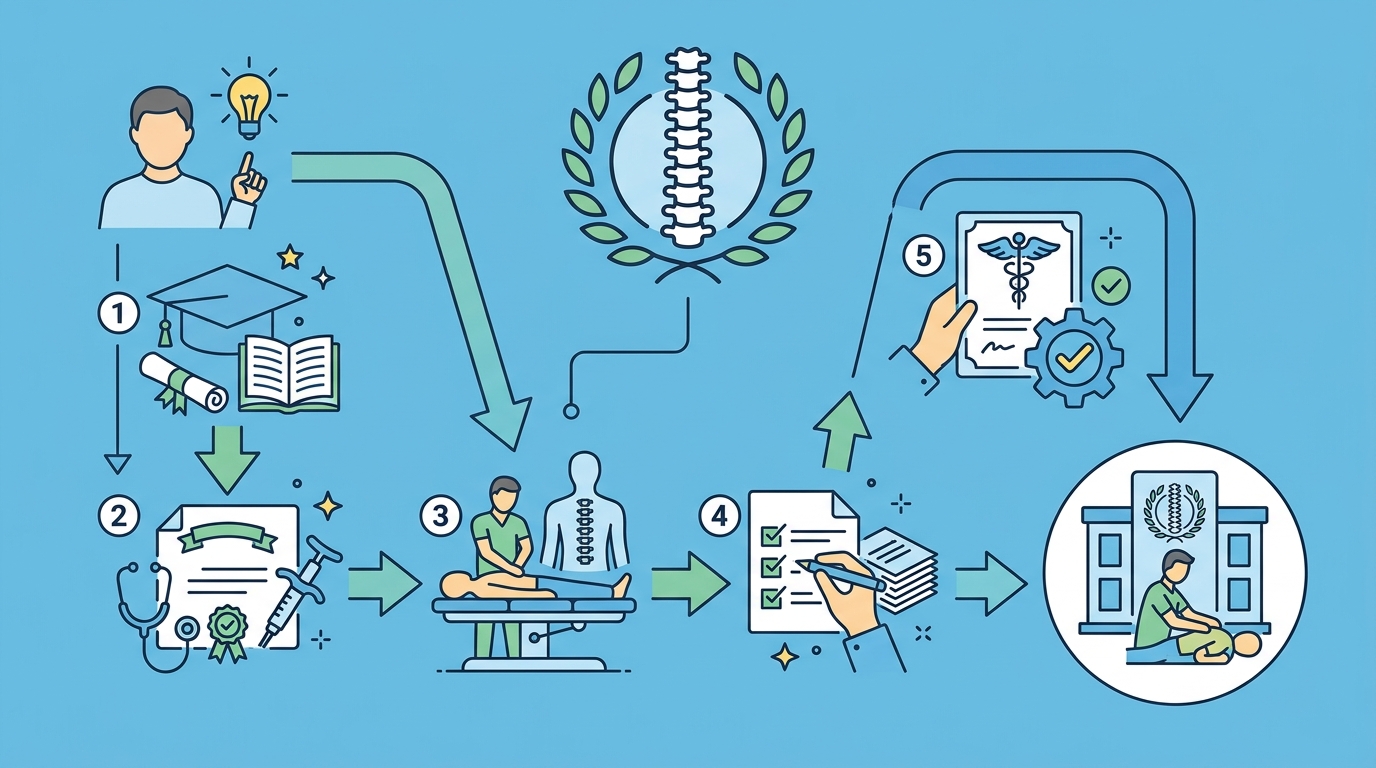
- The PT path requires far more upfront schooling: a bachelor's degree plus a Doctor of Physical Therapy program that typically lasts three years, versus about two years for an accredited PTA associate's degree, with licensure and a qualifying exam required in all states for both (U.S. Bureau of Labor Statistics, 2025).
- Look up current median annual wages in the BLS Occupational Outlook Handbook (2025), which lists physical therapists and physical therapist assistants separately — and expect bending, lifting and long spells on your feet in both roles, plus evening or weekend shifts for some PTAs.
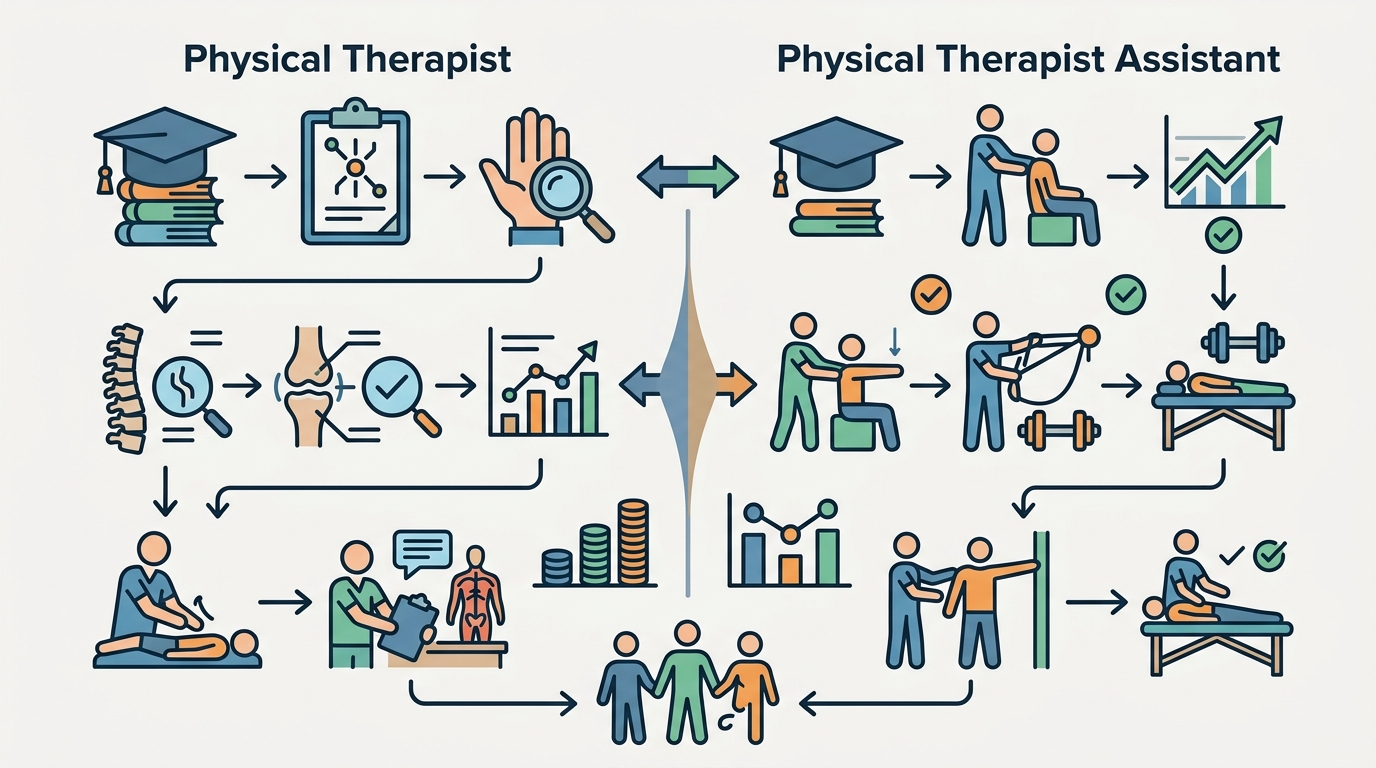
A physical therapist evaluates patients, diagnoses movement problems and writes the plan of care; a physical therapist assistant carries out much of that plan under the therapist's direction and reports back on progress (U.S. Bureau of Labor Statistics, 2025). The biggest practical gap is schooling: in the United States, a PT needs a doctoral degree, typically a three-year Doctor of Physical Therapy program on top of a bachelor's, while a PTA typically needs a two-year associate's degree from an accredited program (U.S. Bureau of Labor Statistics, 2025).
Both are licensed occupations in every U.S. state, both are physically demanding, and both are projected by BLS (2025) to grow much faster than average. This guide compares entry requirements, how pay is reported, daily tasks and who tends to fit each path.
Head-to-Head Comparison
| Dimension | Physical Therapist (PT) | Physical Therapist Assistant (PTA) |
|---|---|---|
| Typical entry requirement | Doctoral or professional degree — in practice the Doctor of Physical Therapy (DPT). DPT programs typically run three years and generally require a bachelor's degree plus prerequisite coursework such as anatomy, chemistry and physics first (U.S. Bureau of Labor Statistics, 2025). The DPT is accredited by the Commission on Accreditation in Physical Therapy Education (CAPTE) and provides the educational preparation required for practice in all 50 states (University of Southern California, Office of Licensure). Every state requires licensure, including a qualifying exam; other requirements such as a state law exam or background check vary by state (U.S. Bureau of Labor Statistics, 2025). | Associate's degree from an accredited PTA program, typically about two years, plus a license or certification (U.S. Bureau of Labor Statistics, 2025). All states require PTAs to be licensed or certified, which typically means graduating from an accredited program and passing a qualifying exam (U.S. Bureau of Labor Statistics, 2025). |
| Median pay | The U.S. Bureau of Labor Statistics publishes a median annual wage for physical therapists in its 2025 Occupational Outlook Handbook. Check that figure directly before you commit to a program; it is a national U.S. median, and state and metro-area pay differ from it. | BLS (2025) publishes a median annual wage for physical therapist assistants specifically, and a separate median for the combined "physical therapist assistants and aides" group. Use the PTA-only figure, since aides are a different, lower-credentialed role. Again this is national; state and local pay vary. Outside the U.S., use your own national statistics agency. |
| Physical and schedule demands | On your feet for much of the day working with patients, and vulnerable to back injuries because of frequent lifting and moving of patients. Most PTs work full time during normal business hours, though some work evenings or weekends (U.S. Bureau of Labor Statistics, 2025). | Frequently on your feet and moving, with a lot of kneeling, stooping, bending and standing for long periods. Some PTAs work nights and weekends because clinics keep extended hours (U.S. Bureau of Labor Statistics, 2025). Hands-on dexterity and physical stamina are listed among the key qualities for the role. |
| Five-year outlook | Employment of physical therapists is projected to grow much faster than average, and BLS (2025) also publishes the projected employment change and the number of annual openings for the occupation. BLS projections run over a ten-year period, so read a five-year horizon as roughly the first half of that published decade. | Employment of physical therapist assistants and aides is also projected to grow much faster than average (U.S. Bureau of Labor Statistics, 2025), over the same published ten-year projection period. Check the handbook entry for the exact years and the annual-openings figure before you use it in a decision. |
Two things the table cannot settle for you. First, the pay gap you will find in the handbook is attached to a difference of several years of full-time study and tuition, so compare lifetime cost, not just the two medians. Second, these are U.S. figures and U.S. licensing rules; if you are working in another country, the titles, scope of practice and regulator differ, and you should check the national body that registers physiotherapists there.
Day-to-Day Differences
Picture the same outpatient orthopedic clinic on a Tuesday morning, with both a PT and a PTA on the schedule.
The physical therapist starts the day with a new patient — a post-surgical knee referred that week. She reviews the medical history, tests range of motion, strength and gait, and diagnoses the movement problem, then writes an individualized plan of care setting out the exercises, progression and goals (U.S. Bureau of Labor Statistics, 2025). That initial evaluation and the plan of care are hers alone; a PTA never performs the evaluation or writes the plan. Between patients she documents findings, records progress on existing cases, and decides whether one patient is ready to move from assisted to unsupported standing. Mid-afternoon she handles a discharge conversation and signs off on a progress note. Her day is a mix of hands-on treatment, clinical decisions and paperwork she is legally accountable for, and most of it falls inside normal business hours (U.S. Bureau of Labor Statistics, 2025).
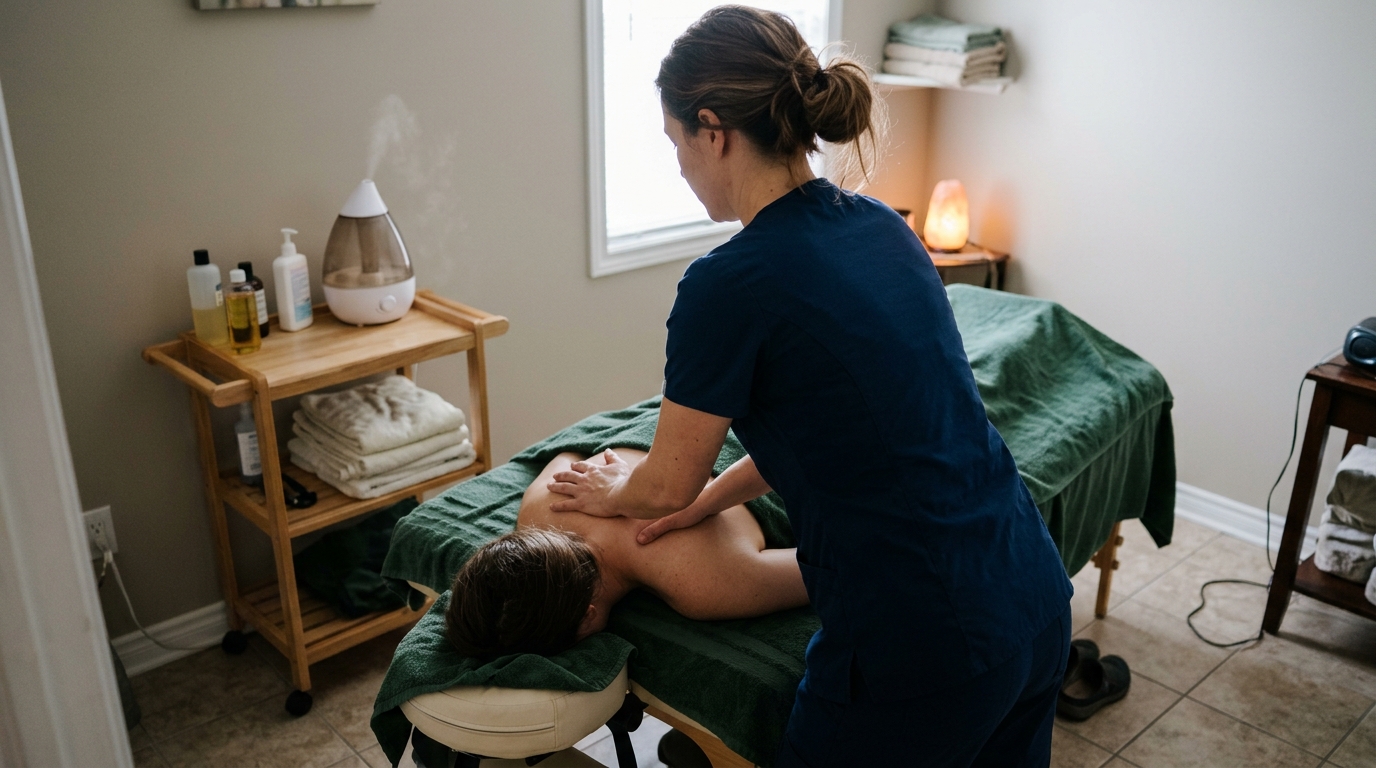
The physical therapist assistant works the same Tuesday mostly in contact with patients. He takes the knee patient through the exercise sequence the PT wrote, counts reps, corrects form, performs manual work such as massage and stretching under the therapist's direction and supervision, and sets up and cleans equipment between sessions (U.S. Bureau of Labor Statistics, 2025). He observes how each patient responds — a shoulder that is guarding more than last week, a patient who is dizzy on the treadmill — and reports that status back to the supervising physical therapist. That upward reporting and checking before changing an exercise is a routine part of a PTA's day and not something a PT does about her own caseload. If this clinic runs evening hours, his shift may be the one that covers them (U.S. Bureau of Labor Statistics, 2025).
The practical upshot: the PT spends part of every day on assessment, diagnosis and documentation that carries clinical and legal weight; the PTA spends more of the clock in direct, repetitive, hands-on contact with patients. If what you want is more hours of treating and fewer hours of charting and deciding, that difference matters more than pay does.
Who Thrives in Each Path
Physical therapist
- You already have, or are willing to finish, a bachelor's degree with anatomy, chemistry and physics behind you — because those prerequisites plus a three-year DPT are the gate, not an optional extra (U.S. Bureau of Labor Statistics, 2025).
- You like being the person who decides. Diagnosing movement problems and writing an individualized plan of care means owning the call when a patient is not progressing (U.S. Bureau of Labor Statistics, 2025).
- You are detail oriented in writing, not only in your hands — evaluating and recording patient progress is a daily duty, and communication and compassion are listed alongside it as core qualities (U.S. Bureau of Labor Statistics, 2025).
- You want a specialization ladder. After gaining experience, some PTs become board-certified clinical specialists in areas such as orthopedics, sports or geriatrics by passing an exam and completing clinical work in that specialty (U.S. Bureau of Labor Statistics, 2025).
Physical therapist assistant
- You want to be working and licensed in about two years rather than seven, and you would rather not carry several more years of tuition (U.S. Bureau of Labor Statistics, 2025).
- You come from coaching, personal training, caregiving or a trade — work that built hands-on dexterity and physical stamina, which BLS (2025) names as key qualities for the role.
- You get satisfaction from repetition done well: cueing the same squat for the fortieth time that week, and noticing on the fortieth that the knee has stopped collapsing inward.
- You are comfortable working inside someone else's plan and escalating rather than improvising, since treatment happens under the direction and supervision of a physical therapist (U.S. Bureau of Labor Statistics, 2025).
The tradeoff to be honest about on both sides: this is bending, kneeling and lifting work. PTs face a real risk of back injury from moving patients, and PTAs spend long stretches on their feet and may cover nights and weekends (U.S. Bureau of Labor Statistics, 2025).
Frequently asked questions
I'm already a PTA. How do I become a PT mid-career?
There is no automatic upgrade. You apply to a CAPTE-accredited Doctor of Physical Therapy program, which typically requires a bachelor's degree plus prerequisites such as anatomy, chemistry and physics, then runs about three years (U.S. Bureau of Labor Statistics, 2025). Some schools run PTA-to-DPT bridge pathways that credit prior coursework. After graduating you must pass your state's licensing exam.
Which pay figure should I actually look up?
Use the BLS Occupational Outlook Handbook (2025) and read the two occupational profiles separately. For assistants, note that BLS publishes both a PTA-specific median annual wage and a combined "physical therapist assistants and aides" median; the combined one mixes in a different role. Both are national U.S. figures, so also check your state's data, since local pay varies.
Is the job outlook better for one than the other?
BLS (2025) projects employment to grow much faster than average for physical therapists and also for physical therapist assistants and aides, over the handbook's published ten-year projection period. For PTs, BLS additionally publishes projected employment change and annual openings. Check the current handbook entries for the exact years and numbers rather than relying on a summary.
Can a PT move into a PTA role if the schooling proves too much?
Changing direction is possible but not free. PTA practice requires an associate's degree from an accredited PTA program, typically about two years, plus state licensure or certification (U.S. Bureau of Labor Statistics, 2025). Unfinished DPT coursework does not substitute for it. If you are mid-DPT, speak to your program about leave of absence options before you withdraw.
Do both roles have to deal with licensing paperwork every year?
All states license or certify both PTs and PTAs, and both routes include passing a qualifying exam (U.S. Bureau of Labor Statistics, 2025). Other requirements, such as a state law exam or a background check, vary by state. Renewal rules and continuing education also differ by state board, so check the board where you plan to work before you enroll anywhere.
Sources
- U.S. Bureau of Labor Statistics — Physical Therapists : Occupational Outlook Handbook (2025)
- U.S. Bureau of Labor Statistics — Physical Therapist Assistants and Aides : Occupational Outlook Handbook (2025)

Written by
Wyatt covers work outside the office: construction, logistics, repair, and the people who keep things running. He's skeptical of career advice that assumes everyone sits at a desk.