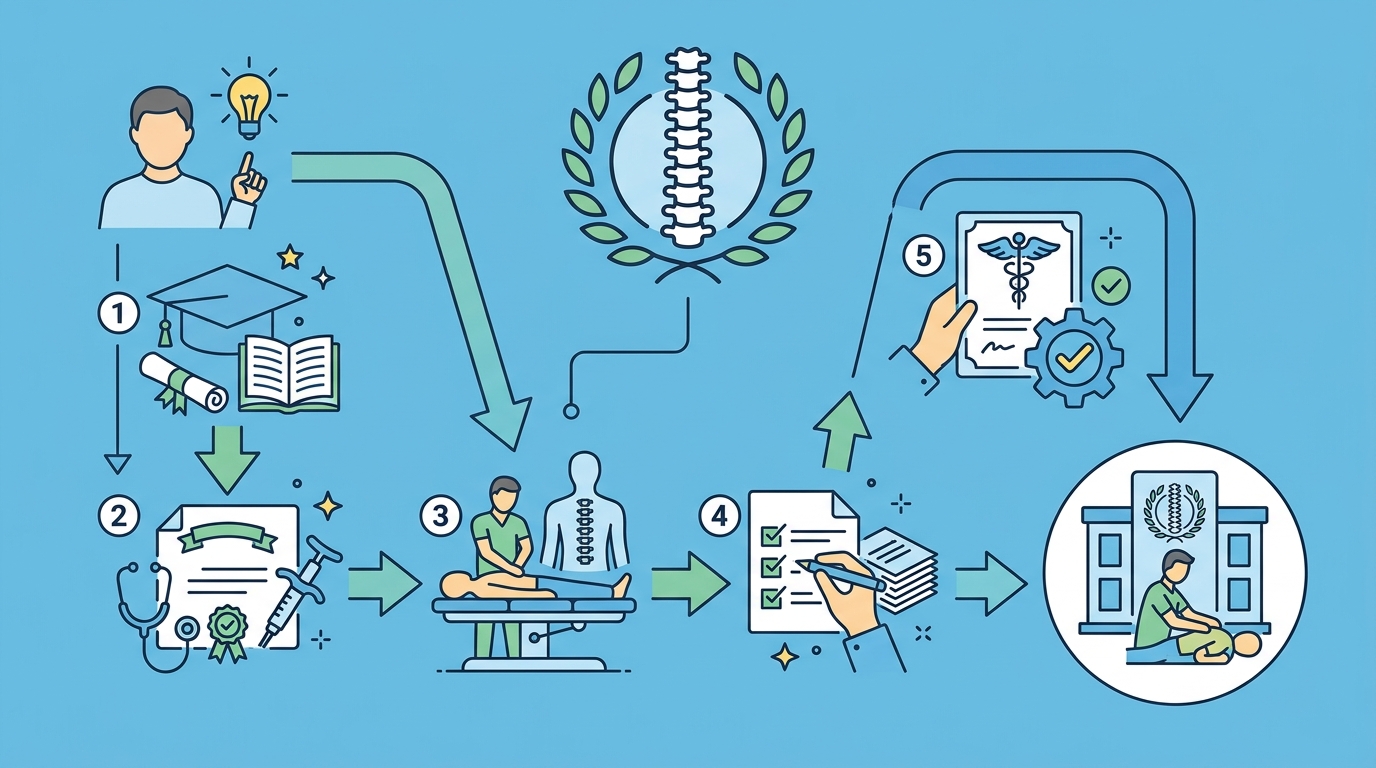
What Does a Massage Therapist Do? A Day in the Life
From the intake conversation to sanitising the table at the end, here is how the work is structured hour by hour and what it asks of your body.
Quick answer
- Core task is applying pressure to manipulate soft tissues and joints, plus taking client medical histories and keeping treatment records (U.S. Bureau of Labor Statistics and O*NET OnLine)
- Most U.S. states require a licence or certification, usually after graduating an approved programme and passing an exam (U.S. Bureau of Labor Statistics, 2026-08-27); the UK has no statutory licence
- Physically demanding work: repetitive-motion problems and fatigue from standing for extended periods are the most common injuries (U.S. Bureau of Labor Statistics, 2026-08-27)
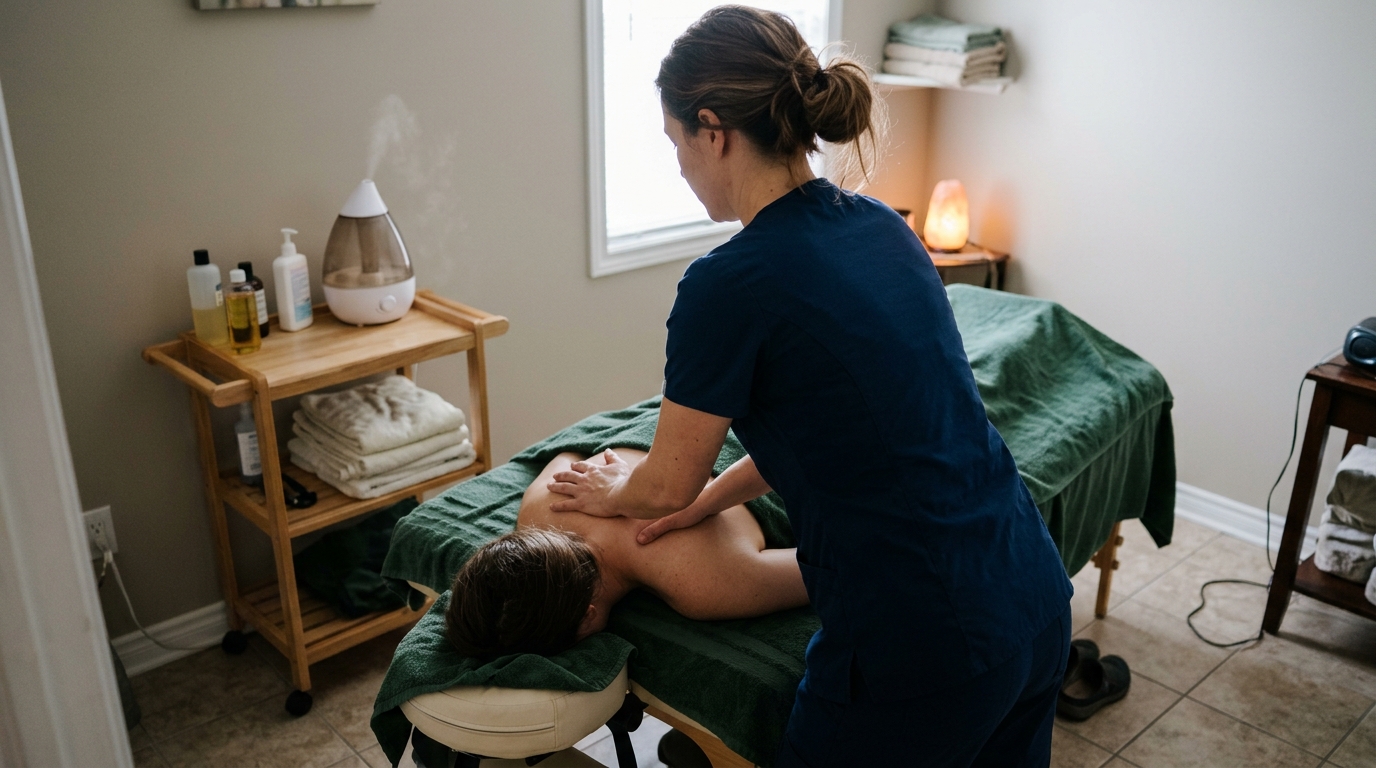
A massage therapist treats clients by applying pressure to manipulate the body's soft tissues and joints (U.S. Bureau of Labor Statistics, 2026-08-27). Day to day that means short consultations about health history, hands-on sessions of roughly 30 to 90 minutes, written treatment notes, and a constant cycle of cleaning and resetting the room between clients.
It is appointment-based work, so hours vary considerably and part-time schedules are common (U.S. Bureau of Labor Statistics, 2026-08-27). Requirements differ sharply by country: most U.S. states require a licence, while massage is not regulated by law in the UK.
What a Massage Therapist Does
Massage therapists treat clients by applying pressure to manipulate the body's soft tissues and joints (U.S. Bureau of Labor Statistics, 2026-08-27). The goal varies by client: easing pain in one muscle group, restoring range of motion after an injury, reducing tension, or relaxation.
The work exists in day spas and hotel or resort spas, salons, fitness and health clubs, chiropractic and physicians' offices, physical therapy and rehabilitation clinics, sports and athletic facilities, and in clients' own homes or offices through mobile practice. Many therapists are self-employed and rent a room or work from home, which adds booking, invoicing and marketing to the job.
A session is more than hands-on time. O*NET OnLine rates conferring with clients about their medical histories as the single most important task in the occupation, ahead of massaging and kneading muscles and soft tissue, maintaining the massage area by restocking supplies and sanitising equipment, applying finger and hand pressure to specific points, developing treatment plans, and maintaining treatment records.
Entry-level therapists usually work a set shift at a spa or clinic, take whichever clients reception books, and work from a standard menu of services. Experienced therapists more often build a repeat client list, specialise in areas such as sports, deep tissue or prenatal massage, set their own session length and price, and refer clients on to other practitioners when a problem sits outside their scope (O*NET OnLine).
A Typical Day
- Checks the day's bookings in the clinic or salon scheduling software and reads back through returning clients' treatment records
- Sets up the room: fresh linens on the table, oils and lotions laid out, heating adjusted, and aids such as hot stones, infrared lamps or wet compresses prepared (Texas Career Check, citing O*NET)
- Confers with the first client about medical history, current pain, medications and areas to avoid, then agrees a treatment plan and session length
- Delivers the massage, kneading muscles and soft tissue, applying finger and hand pressure to specific points, and adjusting pressure on the client's feedback (O*NET OnLine)
- Gives aftercare advice — stretches, water, what to expect over the next 24 hours — and books the follow-up at the front desk or in the booking app
- Sanitises equipment, changes linens, restocks oils and towels and washes hands between every client, a turnaround that usually takes 10 to 15 minutes
- Writes up treatment records while the detail is fresh: techniques used, areas worked, client response (O*NET OnLine)
- Refers a client to a physician or physiotherapist when symptoms fall outside massage scope, and takes a stretching or rest break to protect hands, wrists and shoulders
Salary and Job Outlook
There is no single rate for this job. Pay depends on whether you are employed or self-employed, how many appointments you can physically sustain in a week, and where you work.
| Experience level | How pay is usually structured | Where to check the current figure |
|---|---|---|
| Entry (first 1–2 years) | Hourly rate or a split of each service fee at a spa, salon or clinic, often part time, usually plus tips | U.S.: "Massage Therapists" in the BLS Occupational Outlook Handbook. UK: the National Careers Service profile |
| Mid (established client base) | Higher commission split or guaranteed hourly rate, with fewer gaps between appointments | Same sources, plus local job adverts |
| Experienced / self-employed | Charges per session and covers room rent, insurance, linens and marketing from that fee | Local practitioner rates, minus running costs |
| National median | The U.S. Bureau of Labor Statistics publishes a median annual wage for massage therapists for May 2025 | BLS Occupational Outlook Handbook, median pay, May 2025 |
The same BLS handbook publishes the projected job outlook for 2025–35 and the average annual openings projected over the decade. The UK National Careers Service profile gives an indicative salary range and typical weekly hours; elsewhere, check Statistics Canada, the Australian Bureau of Statistics or your own national agency.
Two things shape earnings more than the headline figure: part-time work is common and weekly hours vary considerably because therapists work by appointment (U.S. Bureau of Labor Statistics, 2026-08-27), and the physical demands limit how many sessions a day most people sustain.
Skills and Qualifications
Hard requirements you can obtain and verify
- A diploma or certificate from a massage therapy programme at a private school or community college, covering anatomy, physiology, kinesiology, pathology, business and ethics (U.S. Bureau of Labor Statistics, 2026-08-27)
- A state licence or certification: most U.S. states regulate massage therapy, and licensing typically requires graduating an approved programme and passing an exam (U.S. Bureau of Labor Statistics, 2026-08-27)
- Items commonly required alongside a U.S. licence: background check, liability insurance, CPR certification, and continuing education for renewal (U.S. Bureau of Labor Statistics, 2026-08-27)
- In the UK, where massage is not regulated by law, a recognised qualification such as the VTCT Skills Level 3 Diploma in Massage Therapy, which needs a Level 2 Complementary Therapy qualification to enter and covers body massage, aromatherapy, Indian head massage and stone therapy (National Careers Service)
- Voluntary UK registration with the Complementary and Natural Healthcare Council for sports massage, where training must meet the Sports Massage National Occupational Standards
- Physical stamina, strength and manual dexterity to stand and work hands-on for a full shift (U.S. Bureau of Labor Statistics, 2026-08-27)
- Competence with booking and record-keeping software
Soft skills that decide who keeps clients
- Communication and interpersonal skills, to take a clear history and explain what you are doing
- Decision-making, to judge which techniques suit a condition and when to refer out
- Empathy and integrity, since clients are undressed, often in pain, and trusting you with health information
- Time management, to keep sessions and room turnarounds on schedule (U.S. Bureau of Labor Statistics, 2026-08-27)
How to Get Started
- Check your jurisdiction's rules first. Most U.S. states regulate massage therapy and require a licence or certification (U.S. Bureau of Labor Statistics, 2026-08-27), so read your state board's approved-programme list before paying for training. In the UK there is no statutory licence, so the question is which qualification employers and insurers accept.
- Enrol in a massage therapy programme at a private school or community college. A diploma or certificate takes several months to a few years (U.S. Bureau of Labor Statistics, 2026-08-27). A common UK route is a Level 2 Complementary Therapy qualification followed by the VTCT Skills Level 3 Diploma in Massage Therapy (National Careers Service).
- Complete the supervised hands-on hours your programme requires, and use them to practise taking medical histories and writing treatment notes, not only technique.
- Sit the required exam and apply for your licence where one exists, allowing time for the background check, liability insurance and CPR certification (U.S. Bureau of Labor Statistics, 2026-08-27).
- Apply for employed roles first — spas, salons, chiropractic or physical therapy clinics, fitness centres — where reception handles bookings while you build speed and stamina. Expect part-time hours at the start.
- After a year or two, decide whether to specialise or go self-employed, register with a voluntary body such as the CNHC if that is the norm where you work, and keep a continuing education log, since U.S. licence renewal commonly requires it.
Frequently asked questions
Do you need a licence to be a massage therapist?
In the United States, most states regulate massage therapy and require a licence or certification, usually after graduating an approved programme and passing an exam (U.S. Bureau of Labor Statistics, 2026-08-27). Other common requirements are a background check, liability insurance and CPR certification. In the UK there is no statutory licence and massage is not regulated by law, so there is no government exam or register, though qualifications matter to employers and insurers. Check your own state or national rules before enrolling anywhere.
How long does it take to become a massage therapist?
Massage therapy programmes are typically run by private schools or community colleges, and a diploma or certificate takes several months to a few years depending on the programme and whether you study full time (U.S. Bureau of Labor Statistics, 2026-08-27). Add time for the licensing exam and application where your state requires one. A UK route through a Level 2 Complementary Therapy qualification into the VTCT Skills Level 3 Diploma also runs across several months or more.
Is massage therapy hard on your body?
Yes, and specifically so. Giving massages is physically demanding, and the most common injuries and illnesses in the occupation are repetitive-motion problems and fatigue from standing for extended periods (U.S. Bureau of Labor Statistics, 2026-08-27). That is why therapists cap the number of sessions they take in a day, use body weight rather than grip strength where they can, and build stretching breaks into the schedule.
How much do massage therapists earn and what is the job outlook?
Pay depends on whether you are employed on an hourly rate or a share of each service fee, or self-employed and charging per session while covering room rent, insurance and supplies. The U.S. Bureau of Labor Statistics publishes a median annual wage for May 2025, a projected outlook for 2025–35 and average annual openings in its Occupational Outlook Handbook; the UK National Careers Service profile gives an indicative salary range and typical weekly hours. Check those directly rather than relying on general claims about demand.
Sources
- U.S. Bureau of Labor Statistics — Massage Therapists : Occupational Outlook Handbook (2026-08-27)
- O*NET OnLine (U.S. Department of Labor/Employment and Training Administration) — 31-9011.00 - Massage Therapists

Written by
Priya tracks wages, layoffs, and the slow shifts in what counts as a stable job. She writes for readers trying to make sense of numbers that rarely match their own experience.