How to Prepare for a Final Round Interview
A final round is a decision meeting, not a screen — here is how to schedule your preparation, what to carry in, and how to handle the awkward questions.
Quick answer
- One week out, spend an hour on the employer's own reports, recent press releases and your interviewers' public professional profiles, then write a one-page brief you can reread.
- Three days out, rehearse six STAR stories out loud, ideally in a mock interview at a school career centre or public employment service.
- The day before, print extra copies of your resume and reference list, time your route, and lay your clothes out.
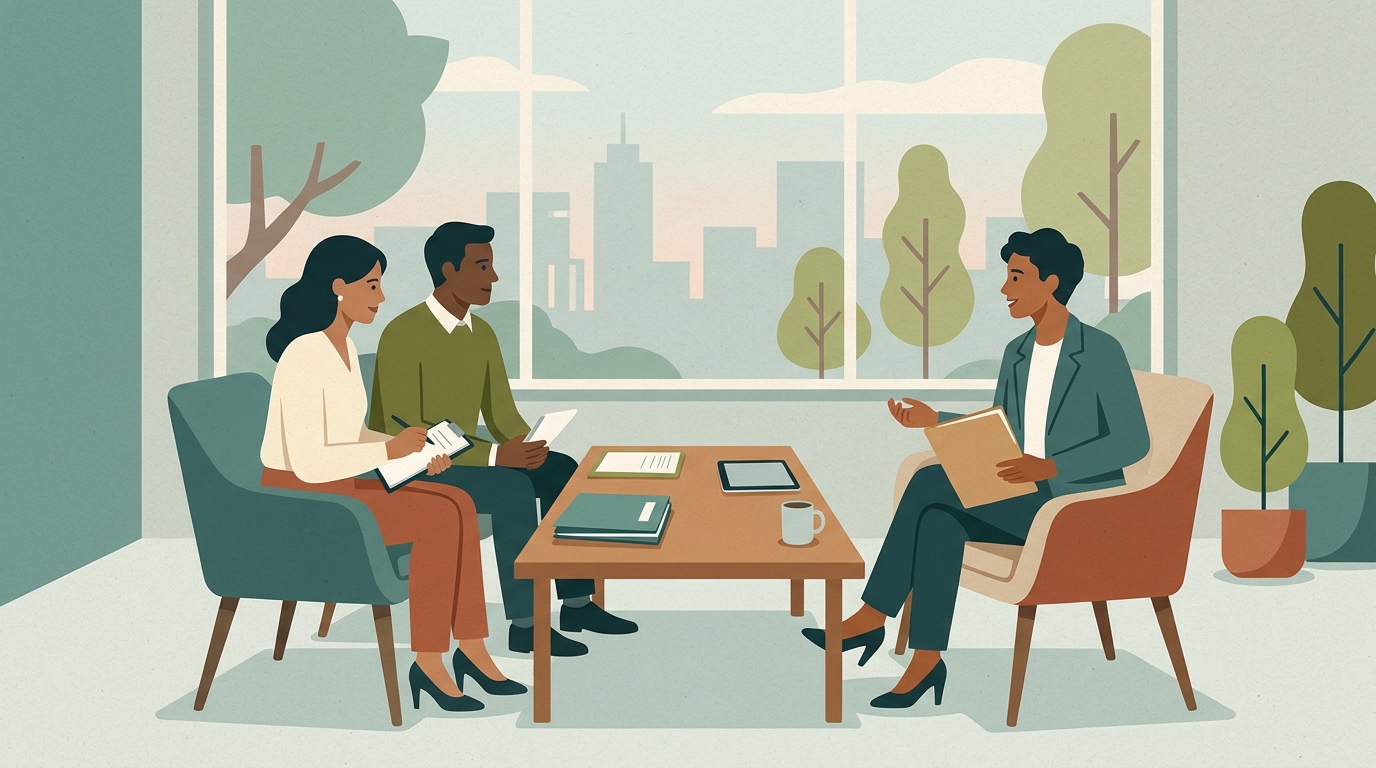
A final round interview usually means the employer has narrowed the field to a few people and is deciding between them. The questions get more specific, more people are in the room, and the conversation often turns to money, start dates and how you would handle real problems in the role.
What a final round actually involves varies widely by employer, sector and country — it may be one panel, a full day of meetings, a presentation, or a casual lunch that still counts. Prepare for the format you have been told about, and ask the recruiter if you have not been told.
Your Prep Timeline
- One week before — 60 to 90 minutes: build an employer brief. Researching the employer and the job prepares you to answer questions, show enthusiasm and form your own questions (CareerOneStop, U.S. Department of Labor, undated). Use a fixed method rather than general browsing: read the organisation's own annual or impact report, its last six months of press releases or news posts, its product or service pages, and the public professional profiles of everyone you are told you will meet. Condense it to one page — what they sell, who to, what changed recently, and three things you would want to fix or learn in month one.
- Six days before — 45 minutes: build a story bank. Write six short examples in Situation, Task, Action, Result order, each with a real number or tool in it. Cover: a project you led, a conflict you handled, a failure, a time you worked across teams, a time you changed someone's mind, and your single best result. Final rounds reuse screening questions at a deeper level, so pick stories you can be cross-examined on.
- Four days before — 30 minutes: prepare for the format. Confirm with the recruiter who you are meeting, their job titles, how long each session runs, and whether there is a presentation, written task or site tour. If there is a task, ask what they will assess. Write the agenda down.
- Three days before — 45 minutes: rehearse out loud. Practising answers on paper and out loud, including through a mock interview at a school career centre or a public employment service such as an American Job Center, helps you respond clearly and intentionally (CareerOneStop, U.S. Department of Labor, undated). Record yourself on your phone once and watch it back for filler words and answers over two minutes.
- Two days before — 30 minutes: set your pay position. Pay structures vary by employer and country — base only, base plus bonus, hourly, or a published band in the public sector. Check three sources: the official statistics body for your country (for example the Bureau of Labor Statistics in the United States, the Office for National Statistics in the United Kingdom, Statistics Canada, or the Australian Bureau of Statistics), current advertisements for the same job title in the same city, and any published band from the employer itself. Write down one number you would accept and one you would walk away from.
- The day before — 30 minutes: logistics. Print extra copies of your resume and your reference list, plus any work documents (CareerOneStop, U.S. Department of Labor, undated). Time the route at the same hour you will travel, or test your camera, microphone and the meeting link on the device you will use. Lay out clothes that are neat, clean and appropriate to that workplace (CareerOneStop, U.S. Department of Labor, undated).
- The morning of — 20 minutes: reread and leave early. Reread your one-page brief and your list of questions, eat something, then plan your schedule to arrive 10 to 15 minutes early in person, or to be ready to sign on 10 to 15 minutes early online (CareerOneStop, U.S. Department of Labor, undated).
Day-Of Checklist
- Folder packed with extra printed copies of your resume, a copy of your job references, and any work documents or portfolio samples (CareerOneStop, U.S. Department of Labor, undated).
- Notebook and pen in the bag, with your printed list of questions on the first page (CareerOneStop, U.S. Department of Labor, undated).
- Questions written out covering the daily responsibilities of the job, the qualities that matter most in the person who does it, whether training is available, and the organisation's future priorities (CareerOneStop, U.S. Department of Labor, undated).
- Photo identification and any paperwork the employer asked you to bring, since arriving 10 to 15 minutes early exists partly to complete employer paperwork (CareerOneStop, U.S. Department of Labor, undated).
- Clothes on, checked in a mirror: neat, clean, nothing tight or revealing, no heavy fragrance (CareerOneStop, U.S. Department of Labor, undated).
- Route timed and departure time set in your phone alarm; for a remote round, the link opened once on the actual device, with laptop charged and a second device holding the dial-in number.
- Recruiter's name and phone number written on paper, not only stored in your phone, in case you are delayed.
- Travelling alone — if someone drives you, ask them to wait in the car or collect you later (CareerOneStop, U.S. Department of Labor, undated).
- Phone switched off before you walk into reception, not set to vibrate (CareerOneStop, U.S. Department of Labor, undated).
- Interviewers' names written down so you can send a thank you note by mail or email afterwards, addressed to the person who interviewed you (CareerOneStop, U.S. Department of Labor, undated).
What to Say in Tricky Moments
Greeting reception and the panel
At the desk, then in the room
"Good morning — I'm Priya Raman, here for the 10:30 with the operations team." Then, to the panel: "Thank you for the third conversation. I've been looking forward to meeting the wider group."
"Tell me about yourself"
A 35-second answer, not a life story
"I run supplier onboarding. Our intake queue hit 40 open files last spring, so I rebuilt the checklist in Airtable and renegotiated two document steps, cutting average onboarding from 19 days to 11."
When they ask your salary expectations first
Turning the question back once, politely
"I'd rather hear the band you've budgeted. For reference, I've benchmarked this title against national statistics-office pay data and current ads in this city, so I expect we'll be close."
When you don't know the answer
Say so, then show your method
"I haven't run a migration that size. I'd start by pulling the error logs from the last two releases, agreeing a rollback window with support, and testing on one region first."
Asking about next steps
At the end, before you stand up
"What are the next steps, and when do you expect to decide? Is there anything from today you'd like me to expand on in writing?"
Frequently asked questions
How early should I arrive?
Aim to walk into reception 10 to 15 minutes before the scheduled time, which is also the window CareerOneStop (U.S. Department of Labor) gives for completing employer paperwork. HR experts quoted by HuffPost suggest 15 minutes for in-office interviews. Online, be ready to sign on 10 to 15 minutes early.
What if I get to the building far too early?
Wait outside. One job-interview advice article (Postulit, undated) suggests arriving in the area 25 to 30 minutes ahead, then entering reception 5 to 10 minutes before the start. Use the gap to switch your phone off and reread your questions.
What exactly should I bring?
Extra copies of your resume, a copy of your job references, any work documents, a notebook and pen, and your written list of questions (CareerOneStop, U.S. Department of Labor, undated). Add photo identification and anything the recruiter specifically requested.
Do I still send a thank you note after a final round?
Yes. Send a thank you note by mail or email, addressed to the person who interviewed you, restating your interest in the job (CareerOneStop, U.S. Department of Labor, undated). Send it the same day, and write one to each panel member.
Sources
- CareerOneStop (U.S. Department of Labor) — Get ready to interview
- CareerOneStop (U.S. Department of Labor) — Interviews

Written by
Wyatt covers work outside the office: construction, logistics, repair, and the people who keep things running. He's skeptical of career advice that assumes everyone sits at a desk.