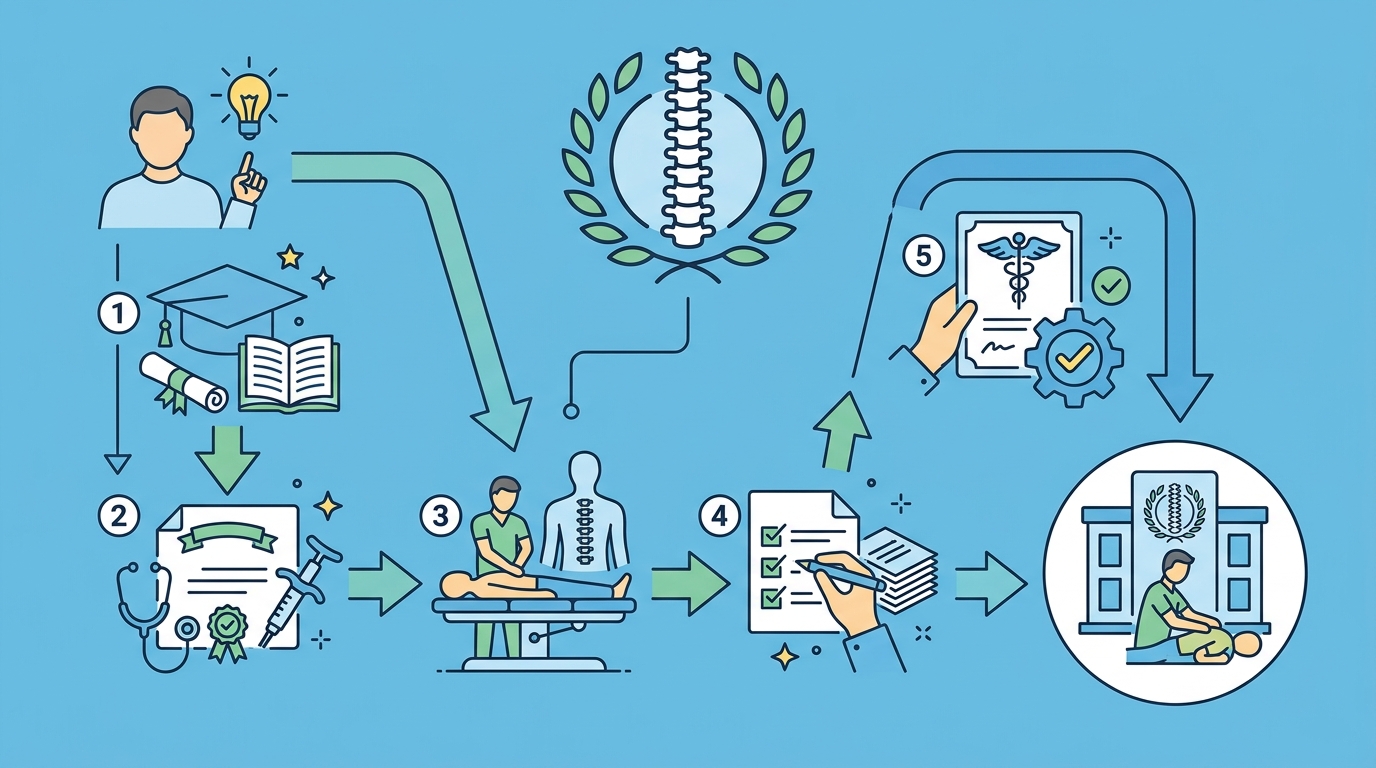
Massage Therapist vs. Esthetician: Which Career Fits You?
One trade asks your hands for force, the other for precision — and the licence, the schedule and the physical ceiling differ more than the job titles suggest.
Quick answer
- Massage therapists' median wage was $58,450 a year, or $28.10 an hour (U.S. Bureau of Labor Statistics, May 2025); skincare specialists are published as a separate BLS profile, so check that figure before comparing.
- Neither needs a degree: BLS (2025) lists a postsecondary nondegree award as typical entry-level education for massage therapists, while esthetics training is measured in hours set by each state cosmetology board.
- The daily work differs in kind — a massage therapist spends 30 to 90 minutes applying pressure to one client's soft tissue (BLS, 2025), while an esthetician runs a layered sequence of cleanse, steam, extraction, mask and homecare advice.
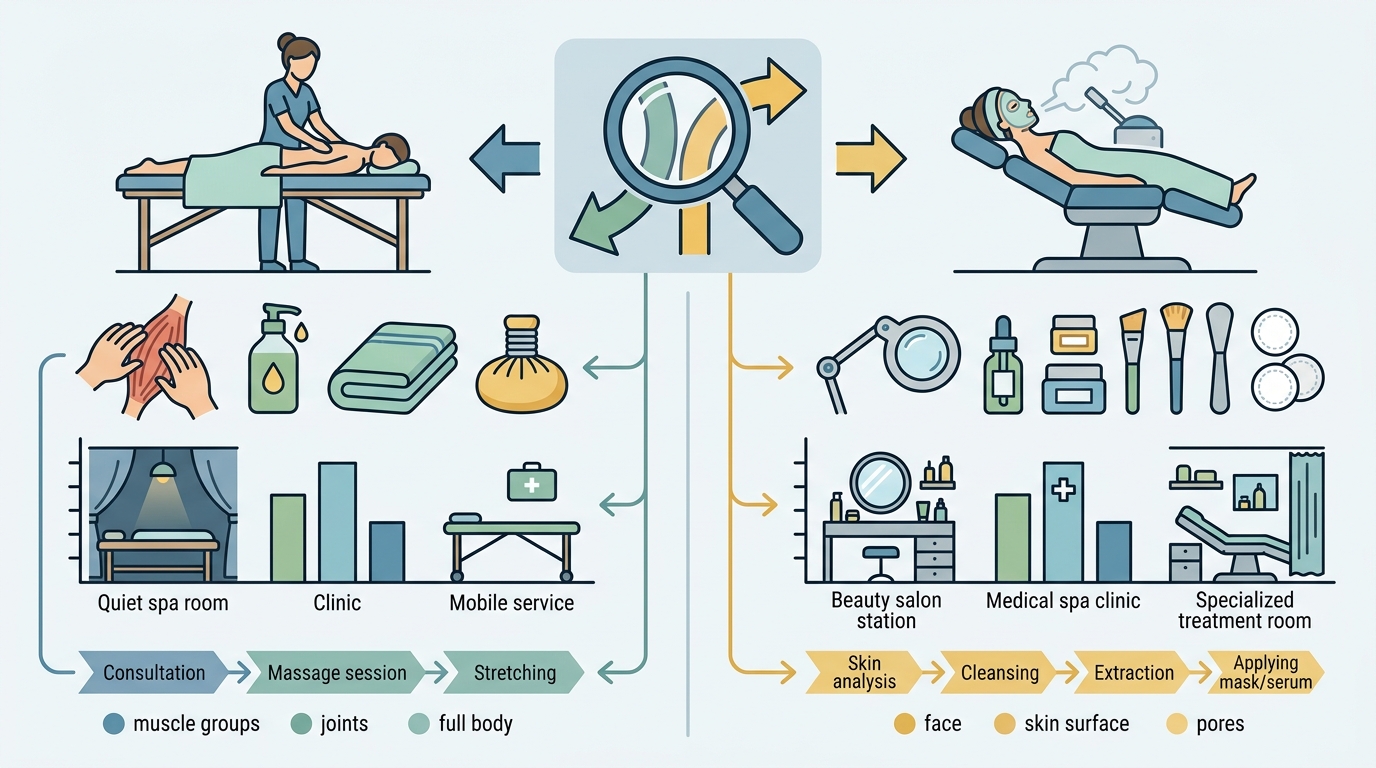
Massage therapists work soft tissue with sustained pressure, usually in 30-to-90-minute table sessions. Estheticians — listed by the U.S. Bureau of Labor Statistics as skincare specialists — work the surface of the skin with cleansers, steam, extractions and masks. Both are licensed, appointment-based trades you can enter without a four-year degree.
Choose by the physical load you can sustain for a decade, whether you want to build your own client book, and what your state licensing board actually requires.
Side-by-Side Comparison
These are United States figures. Outside the US, use your national statistics agency and your own licensing authority — training hours and licence names change at every border.
| Category | Massage Therapist | Esthetician (BLS title: skincare specialist) |
|---|---|---|
| Median pay | $58,450 a year, $28.10 an hour (U.S. Bureau of Labor Statistics, May 2025) | Published as a separate Bureau of Labor Statistics profile under skincare specialists — look up its current median. In both jobs pay commonly combines an hourly or per-service rate with commission and tips, so a median is a midpoint, not a starting rate. |
| Typical entry-level education | Postsecondary nondegree award, with no prior related work experience and no on-the-job training required (U.S. Bureau of Labor Statistics, 2025). Programmes combine classroom anatomy, physiology, kinesiology and pathology with supervised hands-on practice and take several months to a few years; entry normally requires a high school diploma or equivalent (BLS, 2025). | A state-approved esthetics programme at a cosmetology or esthetics school, measured in training hours set by each state board, then a written and practical licensing exam. Confirm the required hours with your board before you enrol. |
| Licence to practise | Most US states require a state licence or registration: graduate from an approved programme, pass an exam, and in many states complete continuing education to renew (U.S. Bureau of Labor Statistics, 2025). Background checks, liability insurance and CPR certification are also common, and CareerOneStop lists state licensing boards (BLS, 2025). | Licensed by the state board of cosmetology or an equivalent body, with written and practical exams and periodic renewal. That board, not your school, sets which peels and devices fall inside your scope of practice. |
| Physical demands | High and repetitive. BLS (2025) names repetitive-motion problems and fatigue from standing for extended periods as the most common injury risks, and notes many therapists cannot perform massage 8 hours a day, 5 days a week. | Sustained standing or perching at a treatment bed, fine hand work close to the face, arms raised for long stretches, plus frequent hand washing and handling of acids and active ingredients. |
| Schedule type | By appointment, so weekly hours vary considerably and part-time work is common (U.S. Bureau of Labor Statistics, 2025). A chair massage may run 5 to 10 minutes; a table massage typically runs 30 to 90 minutes (BLS, 2025). | By appointment inside salon, spa, medical-spa or retail trading hours, which usually include evenings and weekends. Treatments are commonly booked in 30-, 60- and 90-minute blocks with turnaround between clients. |
| Growth outlook | Projected to grow from 2025 to 2035 much faster than the average for all occupations, with about 20,400 openings a year on average, around 155,400 jobs in 2025 and a projected change of 23,700 over the decade (U.S. Bureau of Labor Statistics, 2025). | Projected separately in the same 2025–35 Bureau of Labor Statistics projections release; check the skincare specialists profile for its own growth rate and annual openings. |
Day-to-Day Differences
Compare the first hour of a shift.
A massage therapist arriving for a 9am booking reads the intake form, asks where the pain is and what pressure the client wants, sets the table height and face cradle, places bolsters under the knees, then steps out while the client undresses. For the next 30 to 90 minutes — the typical table session range (U.S. Bureau of Labor Statistics, 2025) — they stand and transfer body weight through forearms, thumbs and elbows into one person's back, shoulders or legs, adjusting as the tissue responds. The hour closes with a stretch suggestion and written session notes; self-employed therapists also fit marketing and appointment booking around treatments (BLS, 2025).
An esthetician's first hour is a sequence rather than one sustained act. They sanitise the treatment bed, lay fresh linens, set up the steamer and magnifying lamp, then analyse the client's skin and ask about products, medication and sun exposure before choosing a protocol. The facial moves through cleanse, exfoliate, steam, extractions under the lamp, massage, mask and SPF — a dozen small product decisions with the client's face inches away and talking throughout. It usually ends with homecare advice, a retail recommendation and a rebooking.
One job asks your body for force. The other asks for stillness, precision and continuous conversation.
Which Career Is Right for You
- Choose massage therapist if you want a licence without a four-year degree. The Bureau of Labor Statistics (2025) lists typical entry-level education as a postsecondary nondegree award, with no prior related experience and no on-the-job training required; programmes run several months to a few years.
- Choose massage therapist if you want to own your client book. BLS (2025) reports the largest shares of massage therapists are self-employed or in personal care services — which also means handling your own marketing, bookings, liability insurance and notes.
- Choose esthetician if you want fixed equipment and posted trading hours rather than carrying a table. Spa and salon work keeps your steamer, lamp, product line and sterilised tools in one treatment room, with shifts set by the business.
- Choose esthetician only if retail selling and rebooking do not put you off. Recommending homecare products and setting the next appointment is a weekly part of the job, often linked to commission.
- Choose massage therapist only if you can plan around the physical ceiling. BLS (2025) names repetitive-motion problems and standing fatigue as the main injury risks and notes many therapists cannot work 8 hours a day, 5 days a week, so full-time income often means fewer treatment hours at a higher rate.
- Choose whichever your state board makes reachable now. Massage licensing usually requires an approved programme plus an exam, with continuing education to renew (BLS, 2025); esthetics hours and exams are set by state cosmetology boards, and CareerOneStop lists them. Check before paying tuition.
Frequently asked questions
Which one pays more starting out?
The Bureau of Labor Statistics reported a median annual wage of $58,450 for massage therapists, or $28.10 an hour, in May 2025, and publishes skincare specialists as a separate profile you should check for the matching figure. Both medians sit above entry level, because pay usually combines a per-service rate or commission with tips. Your starting figure depends more on whether a spa employs you or you rent your own room than on which licence you hold.
Which job is harder on your body over a career?
Massage carries the heavier mechanical load: BLS (2025) names repetitive-motion problems and fatigue from standing for extended periods as the most common injury risks, and notes many therapists cannot perform massage 8 hours a day, 5 days a week. Esthetics strain is more postural — held positions at the treatment bed, fine hand work, frequent hand washing and contact with active ingredients. Both are sustainable with good body mechanics and a cap on daily treatment hours.
Is there more work available in one than the other?
For massage therapists, BLS (2025) projects growth from 2025 to 2035 much faster than the average for all occupations, with about 20,400 openings a year and a projected employment change of 23,700 from a 2025 base of roughly 155,400 jobs. The same 2025–35 projections release covers skincare specialists separately, so read that profile for its own rate. Local demand matters more than the national figure — count the spas, clinics and gyms within commuting distance.
Sources
- U.S. Bureau of Labor Statistics — Massage Therapists : Occupational Outlook Handbook (2025)

Written by
Marisol steers Jobladderhq's coverage of hiring trends and the strange rituals of modern recruiting. She's drawn to the gap between what job ads promise and what the work actually feels like. Her editing hand favors clarity over jargon, always.