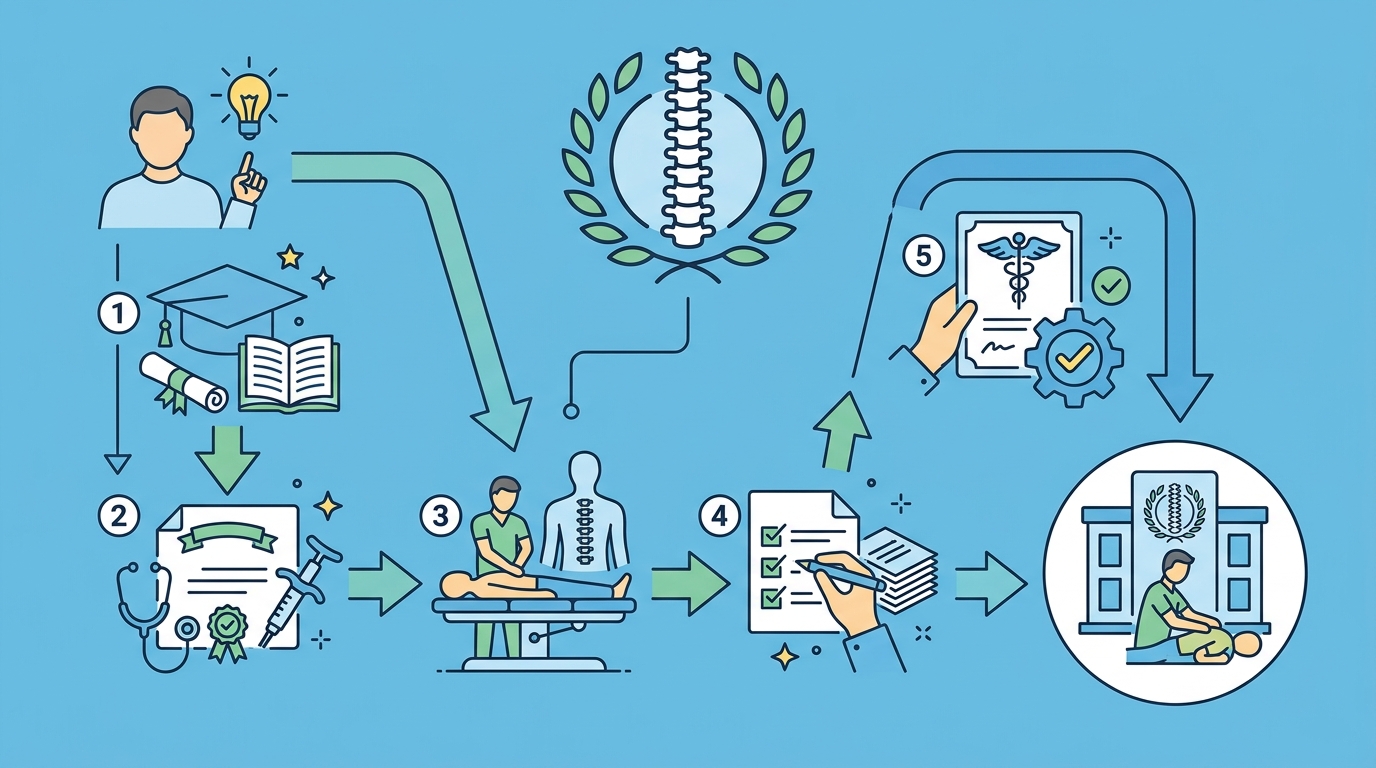
What Does a Physical Therapist Do? A Day in the Life
From the first evaluation of the morning to charting after the last appointment, here is how therapists spend their hours and what training the role takes.
Quick answer
- US median annual wage was $102,760, with the highest 10 percent earning more than $135,140 (U.S. Bureau of Labor Statistics, 2025)
- Entry requires a Doctor of Physical Therapy degree; DPT programmes typically last 3 years after a bachelor's degree (U.S. Bureau of Labor Statistics, 2025)
- All US states require a licence, including a qualifying exam; law exams and background checks vary by state (U.S. Bureau of Labor Statistics, 2025)
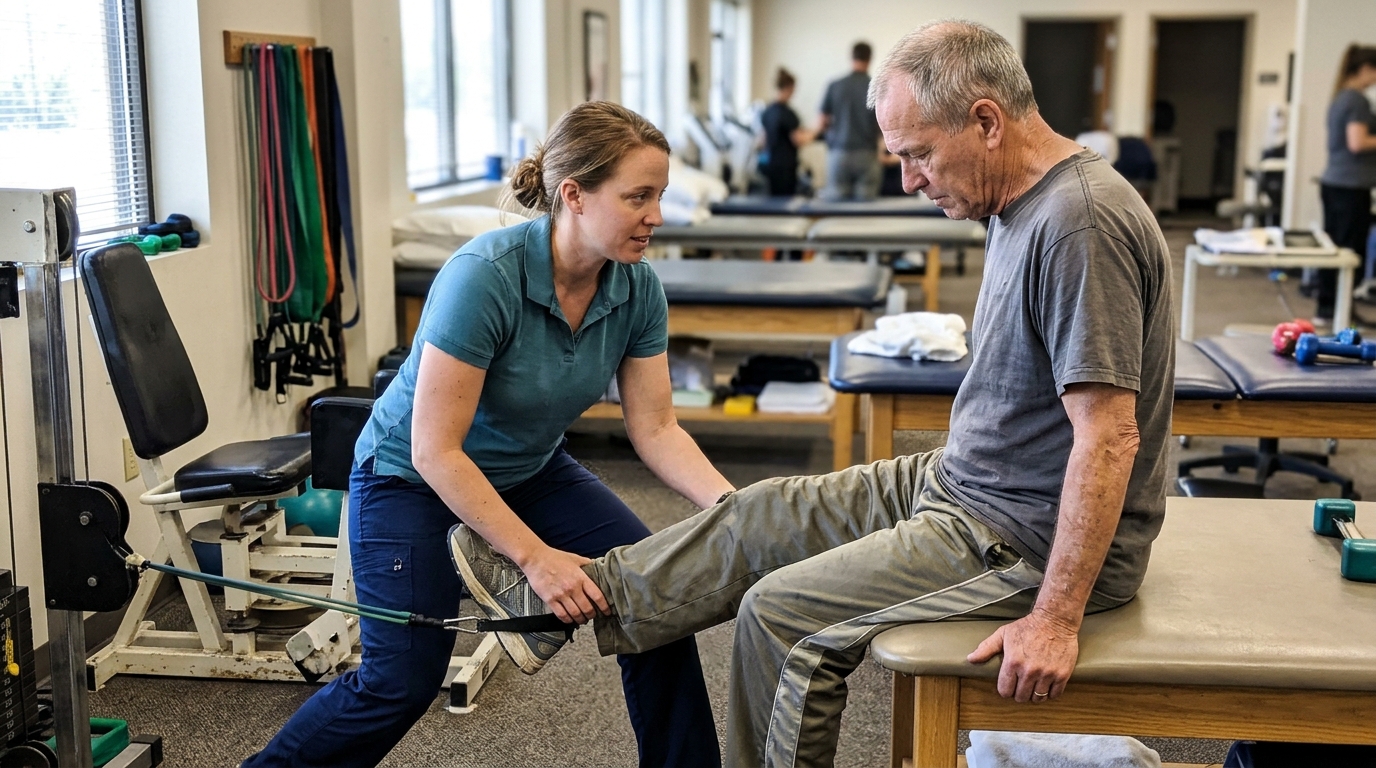
A physical therapist assesses people whose movement is limited by injury, illness, surgery or ageing, then designs and delivers a treatment programme to restore function and manage pain. Most of the working day is spent on your feet with patients, in private clinics, hospitals, patients' homes and nursing facilities, with documentation squeezed between appointments (U.S. Bureau of Labor Statistics, 2025).
It is a graduate-entry, licensed profession. In the United States, new entrants need a Doctor of Physical Therapy (DPT) degree and a state licence obtained by passing a qualifying exam; requirements elsewhere are set by each country's own regulator.
What a Physical Therapist Does
Physical therapists treat people whose ability to move is restricted — after a joint replacement, a stroke, a sports injury, a long illness, or with age. The core function is clinical: examine the patient, work out why movement is limited, record a prognosis, and plan and carry out an individually designed treatment programme (O*NET OnLine, U.S. Department of Labor).
The work happens in a defined set of settings. In the United States, the largest employers are offices of physical, occupational and speech therapists and audiologists (36 percent of jobs), hospitals (26 percent), home healthcare services (11 percent), offices of physicians (6 percent) and nursing and residential care facilities (6 percent) (U.S. Bureau of Labor Statistics, 2025). Setting changes the rhythm: a hospital therapist may see patients at the bedside hours after surgery, while a home health therapist drives between houses and adapts exercises to a kitchen chair and a staircase.
Treatment is hands-on and instructional in roughly equal measure. You guide patients through exercise, use manual techniques, and teach patients and their families home treatment procedures so progress continues between visits (O*NET OnLine, U.S. Department of Labor).
Newly licensed therapists usually carry a general caseload with mentoring from senior staff. After gaining work experience, some become board-certified specialists in areas such as orthopedics, sports or geriatrics, which requires passing an exam and completing clinical work in that specialty (U.S. Bureau of Labor Statistics, 2025), and often brings more complex referrals and supervisory duties.
A Typical Day
Hours vary by setting, but a clinic-based day commonly runs like this:
- Reviews the day's schedule and referral notes in the practice's electronic health record — commonly systems such as Clinicient Insight, eClinicalWorks or MEDITECH (O*NET OnLine, U.S. Department of Labor).
- Performs and documents an initial examination on a new patient: range of motion, strength, gait and pain measures, recorded in the patient's chart or computer (O*NET OnLine, U.S. Department of Labor).
- Records the prognosis, sets measurable goals and builds an individually designed treatment programme.
- Runs back-to-back treatment sessions in the gym area — supervising exercise, applying manual therapy, adjusting resistance and progressions — mostly standing and frequently supporting patients (U.S. Bureau of Labor Statistics, 2025).
- Instructs a patient and a family member in home exercises, demonstrating each movement and handing over a written programme.
- Charts progress notes between appointments and applies procedure codes using medical coding software for billing (O*NET OnLine, U.S. Department of Labor).
- Messages a referring physician about a patient who has not improved as expected, and updates the plan of care.
- Resets plinths and equipment, checks supplies, and confirms the next day's home-visit route if working in home healthcare.
- Clears outstanding documentation before leaving; in hospital or home health roles this may fall into an evening or weekend shift (U.S. Bureau of Labor Statistics, 2025).
Salary and Job Outlook
US figures below are from the U.S. Bureau of Labor Statistics, 2025. Pay outside the United States is set by national health systems, insurers or private employers and published by each country's statistics agency — check that body's current data rather than converting US figures.
| Level or measure | What the data shows (U.S. Bureau of Labor Statistics, 2025) |
|---|---|
| National median, all physical therapists | $102,760 a year |
| Highest 10 percent (experienced, often specialised) | More than $135,140 a year |
| Lowest 10 percent (typically entry level) | Less than the median; BLS publishes this percentile by state and industry |
| Mid-career | Not published as a separate band; BLS reports wages by percentile and industry rather than years of experience |
| Highest-paying industry listed | Home healthcare services |
| Outlook, 2025–35 | Employment projected to grow much faster than the average for all occupations |
Annual openings over the decade are projected to come largely from workers transferring to other occupations or leaving the labour force, not only from new positions (U.S. Bureau of Labor Statistics, 2025). For current figures by state and setting, use the BLS Occupational Employment and Wage Statistics pages.
Skills and Qualifications
Hard requirements you can verify or obtain
- A Doctor of Physical Therapy (DPT) degree; programmes typically last 3 years and usually follow a bachelor's degree with prerequisites such as anatomy, chemistry and physics (U.S. Bureau of Labor Statistics, 2025).
- A state licence. All US states require licensure, including passing a qualifying exam; extra requirements such as a state law exam or background check vary by state (U.S. Bureau of Labor Statistics, 2025).
- Optional board certification in a clinical specialty such as orthopedics, sports or geriatrics, requiring an exam plus clinical work in that specialty (U.S. Bureau of Labor Statistics, 2025).
- Competence in medical and EHR software — for example Clinicient Insight, eClinicalWorks, MEDITECH and medical procedure coding software (O*NET OnLine, U.S. Department of Labor).
- Physical stamina and manual dexterity: you spend much of the day on your feet and physically assist patients (U.S. Bureau of Labor Statistics, 2025).
ONET rates the occupation Job Zone Five, "Extensive Preparation Needed", where most occupations require graduate school (ONET OnLine, U.S. Department of Labor).
Soft skills that shape the work
- Communication — explaining findings and a home programme in terms a patient will follow.
- Compassion, for patients in pain or frustrated by slow recovery.
- Detail orientation, since treatment plans and charts must be accurate and complete.
- Resourcefulness, particularly in home settings with no equipment.
- Time management across a full appointment schedule (U.S. Bureau of Labor Statistics, 2025).
How to Get Started
- Complete a bachelor's degree covering DPT prerequisites — anatomy, chemistry and physics are commonly required (U.S. Bureau of Labor Statistics, 2025). Check each programme's list before choosing modules.
- Build observation or aide hours in a clinic, hospital or nursing facility while studying; many DPT programmes ask applicants to document supervised hours, so confirm the number each one wants.
- Apply to and complete a DPT programme, typically 3 years including clinical placements (U.S. Bureau of Labor Statistics, 2025). Use placements to test which setting suits you.
- Sit the qualifying licensing exam and meet any extra state requirements, such as a law exam or background check, which differ by state (U.S. Bureau of Labor Statistics, 2025). Apply to the licensing board of the state you intend to work in.
- Apply for a first post, targeting the settings that employ the most therapists: therapy offices, hospitals and home healthcare services (U.S. Bureau of Labor Statistics, 2025). Ask at interview about caseload size, mentoring and documentation time.
- After some years in practice, consider board certification in a specialty such as orthopedics, sports or geriatrics, which requires an exam and clinical work in that area (U.S. Bureau of Labor Statistics, 2025).
Outside the United States, check your national regulator's registration route first — qualification titles, exams and recognition of overseas degrees are set country by country.
Frequently asked questions
Do you need a doctorate to be a physical therapist?
In the United States, yes — entrants need a Doctor of Physical Therapy (DPT) degree, and all states require a licence obtained by passing a qualifying exam (U.S. Bureau of Labor Statistics, 2025). DPT programmes typically run 3 years after a bachelor's degree with prerequisites such as anatomy, chemistry and physics. Other countries set their own entry qualification and registration rules, so check the regulator where you intend to practise.
Is being a physical therapist physically demanding?
It is. Therapists spend much of the day on their feet working with patients, and the role calls for physical stamina and manual dexterity because you support and guide people through movement (U.S. Bureau of Labor Statistics, 2025). The load is heaviest in hospital and nursing facility work, where patients may need help transferring from bed to chair.
What hours do physical therapists work?
Most work full time, although part-time work is common, and hours usually fall within normal business hours (U.S. Bureau of Labor Statistics, 2025). Some therapists work evenings or weekends, which is more likely in outpatient clinics serving working patients and in hospital cover rotas. Documentation often extends the day beyond the last appointment.
Where do most physical therapists work?
In the United States, 36 percent work in offices of physical, occupational and speech therapists and audiologists, 26 percent in hospitals, 11 percent in home healthcare services, and 6 percent each in physicians' offices and nursing and residential care facilities (U.S. Bureau of Labor Statistics, 2025). Home healthcare services is also the highest-paying industry listed for the occupation.
Is physical therapy a growing field?
US employment of physical therapists is projected to grow much faster than the average for all occupations between 2025 and 2035, and most annual openings over that decade are projected to come from workers transferring occupations or leaving the labour force (U.S. Bureau of Labor Statistics, 2025). Demand in other countries depends on how health systems fund rehabilitation, so check national labour market data.
Sources
- U.S. Bureau of Labor Statistics — Physical Therapists : Occupational Outlook Handbook (2025)
- O*NET OnLine (U.S. Department of Labor/Employment and Training Administration) — 29-1123.00 - Physical Therapists

Written by
Marisol steers Jobladderhq's coverage of hiring trends and the strange rituals of modern recruiting. She's drawn to the gap between what job ads promise and what the work actually feels like. Her editing hand favors clarity over jargon, always.